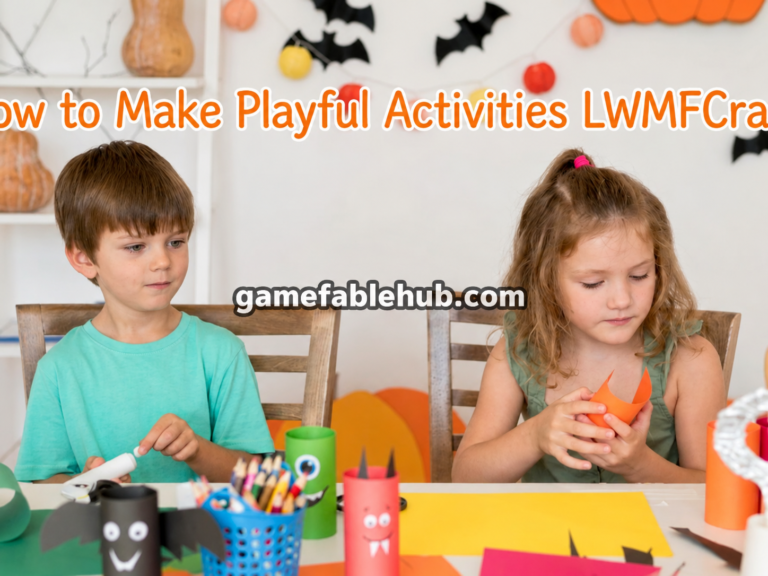
Playful crafts lwmfcrafts is a phrase used in online content about imaginative, hands-on projects for children and families. LWMFCrafts-branded websites describe activities involving paper, reusable materials, decorations, and family crafting. The most appealing projects give participants something enjoyable to do during the making—and afterward.
A decorated box can become a pretend shop. A folded sheet can become a character. A homemade game can provide another activity once the markers are put away.
Table of Contents
This guide contains eleven independently written projects rather than an official LWMFCrafts collection. Choose suitable materials, adapt the instructions to each participant’s abilities, and supervise children throughout.
What Makes a Craft Playful?
A playful craft leaves room for decisions.
Instead of requiring everyone to reproduce the same example, it offers a starting point: build a creature, invent a shop, or design a game.
Participants can choose colors, characters, and rules. They can also change direction when an unexpected idea appears.
The finished object does not need to look polished to be useful.
When exploring playful crafts lwmfcrafts, consider what happens after the project is made. Can it become part of a story? Can someone rearrange it? Is there an activity to try together?
Those questions help you select projects that fit your household’s interests.
Prepare a Simple Craft Station
Start with a small selection of versatile supplies:
- Plain paper and sturdy card.
- Clean cardboard boxes.
- Washable crayons or markers.
- Age-appropriate glue sticks.
- Paper tape.
- Suitable scissors.
- A reusable surface covering.
Adults should handle cutting that requires sharp tools. Inspect reusable packaging for staples, sharp edges, and unsuitable residues.
Avoid small loose decorations when children may put objects in their mouths. Drawn eyes and paper details can replace buttons or beads.
Keep hot glue, craft knives, and other adult tools out of children’s reach.
You do not need every supply for every project. Set out what you plan to use and leave the rest stored.
1. Build a Pretend Delivery Service
Materials: Small boxes, paper, tape, and markers.
The project: Turn clean boxes into pretend parcels.
Draw labels with imaginary destinations, such as “Moon Bakery” or “Dragon Library.” Create matching paper delivery cards.
Arrange a few delivery locations around a clear indoor space. A chair might become a post office, while a shelf becomes a collection point.
Children can sort parcels and decide which destination receives each one.
Keep boxes light, avoid cords or straps, and leave walking routes unobstructed.
For another round, change the destinations or invent a problem: one parcel has arrived at the wrong shop.
This is a useful introduction to playful crafts lwmfcrafts because the making naturally leads into pretend play.
2. Create a Fold-and-Reveal Creature
Materials: Paper and crayons.
The project: Make a character with a surprising hidden section.
Fold a sheet so two edges meet across the middle. Draw a creature on the closed paper.
Then open the fold and connect the separated drawing with an unexpected middle: an enormous mouth, a long body, or a collection of pockets.
Decorate the newly revealed space.
The creature could carry tiny illustrated umbrellas or have a stomach full of pretend stars.
Make several characters and introduce them to one another.
Ask the maker to explain the surprise instead of deciding what the creature should be.
This project needs little preparation and can stop after one drawing.
3. Design a Tabletop Adventure Trail
Materials: A large sheet, markers, paper cards, and large paper playing pieces.
The project: Draw a route through an imaginary place.
Choose a theme such as a jungle picnic, a mountain journey, or a trip through a toy city.
Add spaces along the route and make movement cards with small numbers.
Include a few simple instructions: choose another path, visit the bridge, or tell a short story about the next location.
Test the game before adding elaborate decoration.
Make sure the rules allow players to finish.
Among playful crafts lwmfcrafts ideas, a homemade trail game works well when participants enjoy inventing rules as much as drawing.
4. Make a Paper-Puppet Interview Show
Materials: Folded paper, crayons, tape, and a clean box.
The project: Create characters for a pretend interview.
Draw each puppet on sturdy folded paper so it can be held comfortably without a stick.
Decorate a box as the interview desk. Adults can prepare any openings needed.
Choose a host and a guest.
The guest might be a fictional explorer, a talking sandwich, or the mayor of a very small planet.
Write or invent questions:
“What is your favorite invention?”
“Why are all the roads in your town purple?”
Record nothing unless everyone involved agrees. The show can simply happen around the table.
5. Build an Indoor Miniature Campsite
Materials: Cardboard, folded paper, crayons, and tape.
The project: Make a campsite for paper characters.
Fold paper into small tents and place them on a cardboard base.
Draw sleeping bags, a picnic area, and a walking trail. Create a pretend campfire from paper shapes only—no flames or heating elements.
Add a paper sky showing the weather.
Then invent a camping story. Perhaps the characters need to move their picnic because rain is approaching, or a friendly creature wants to borrow a tent.
Keep the scene small enough to store between sessions.
This gives playful crafts lwmfcrafts a storytelling direction without requiring a large construction project.
6. Create a Mix-and-Match Character Book
Materials: Several sheets of paper, card, markers, and adult help.
The project: Combine interchangeable character sections.
Draw characters with a head, body, and legs, keeping those sections at similar heights on each page.
An adult can assemble the pages and cut horizontal sections so the parts turn separately. Use a suitable paper binding rather than exposed staples.
Turn different sections to create unusual combinations.
A robot head might sit above a chef’s jacket and dinosaur feet.
Name the new character and describe its daily routine.
Prepare the complicated parts in advance if participants prefer drawing to construction. The activity can be shortened to three characters.
7. Open a Cardboard Café
Materials: A box, paper, crayons, and tape.
The project: Create a pretend café counter and menu.
Use a stable box on the floor or table. Draw food on paper and make large order cards.
Choose a café name and invent a few dishes.
Participants can take turns as customers, cooks, or menu designers. Nobody needs to perform a role they dislike.
Keep the food clearly pretend, especially around younger children.
You can add a delivery service or connect the café with another cardboard project.
For families searching playful crafts lwmfcrafts, this offers a project that can be expanded gradually instead of completed in one long session.
8. Make a Matching-Picture Game
Materials: Sturdy paper, crayons, and suitable scissors.
The project: Draw pairs of matching pictures.
Start with a small number of pairs, such as suns, houses, flowers, or invented symbols.
Keep the backs similar so the picture cannot be identified before turning it over.
Place the cards face down and take turns revealing two.
Adjust the game to the participants. You can begin with cards face up or match related pictures instead of identical ones.
Use large cards and avoid detachable decorations.
If drawing duplicate pictures becomes frustrating, create simple shapes or let an adult help. The game should remain manageable.
9. Build a Paper Weather Studio
Materials: Paper, card, crayons, and tape.
The project: Make a pretend weather broadcast.
Draw a simple map of an imaginary place.
Create large paper symbols for sunshine, clouds, rain, and wind. Move the symbols around the map without small magnets or detachable fasteners.
Choose a presenter and invent the forecast.
“Cloudy over Biscuit Mountain, with sunshine near the playground.”
Another participant can decide what the paper characters should pack for their day.
This project combines drawing with a short performance, but speaking is optional. Someone may prefer arranging symbols or writing the forecast.
The studio can also become part of the puppet interview show.
10. Create a Reusable Story-Sorting Folder
Materials: Folded card, paper, crayons, and glue.
The project: Make pockets for story ingredients.
Create three broad categories: characters, places, and surprises.
Draw large cards for each category and store them in paper pockets inside the folder.
Choose one card from each pocket and invent a story.
A sleepy robot might visit a garden where every flower changes color.
Participants can tell the story aloud, draw it, or arrange the cards in order.
Use fewer categories if that is easier.
This is one of the playful crafts lwmfcrafts projects that can remain useful after cleanup because new cards can be added later.
11. Design a Collaborative Imaginary Machine
Materials: Cardboard, paper, tape, and markers.
The project: Build a pretend machine that performs a ridiculous job.
It might sort clouds, translate animal jokes, or turn drawings into imaginary sandwiches.
Use drawn controls and attached paper shapes. Avoid electrical components, batteries, sharp metal, or moving mechanisms that could trap fingers.
Each participant can add one feature and explain its purpose.
Then demonstrate how the machine “works.”
Does it make a noise? Does someone feed it a drawing? What happens when it receives the wrong instruction?
The finished machine does not need to resemble anything real. Its purpose is to provide a shared starting point for invention.
Choose a Project That Fits the Session
Use your available time and interests to narrow the options.
| Situation | Possible project |
|---|---|
| Very little preparation time | Fold-and-reveal creature |
| Interest in pretend shops | Cardboard café |
| Several participants | Imaginary machine |
| Preference for quiet tabletop play | Matching-picture game |
| Enjoyment of storytelling | Story-sorting folder |
| A project to continue later | Miniature campsite |
Treat this as a selection guide rather than an age chart.
Children of the same age may prefer different materials or need different kinds of assistance.
When choosing playful crafts lwmfcrafts, consider participation, not just the finished photograph.
Adapt the Instructions Without Removing Choice
Some participants may benefit from pre-cut shapes or a smaller selection of supplies.
Others may want extra time, a larger drawing surface, or an alternative to glue.
Ask what would help.
A child can direct a project while an adult performs a difficult physical step. Someone who prefers not to speak can draw or arrange the story.
Avoid completing every uncertain moment immediately. Offer help without automatically taking over.
You can demonstrate one method and still allow another suitable approach.
If an activity becomes frustrating, shorten it, change roles, or stop at a satisfying stage.
Keep Materials and Storage Manageable
Choose a container for reusable supplies and another place for unfinished work.
Save packaging selectively. More materials do not automatically create a better session.
Before starting a large build, decide where it can remain while drying or between activities.
Photograph a finished project if the maker wants a record before it is dismantled.
Reusable pieces can return to the supply box when suitable.
A playful crafts lwmfcrafts routine should fit the space available. It does not require keeping every creation permanently.
Let the maker participate in deciding what to display, store, reuse, or discard.
Common Crafting Mistakes to Avoid
Choosing a Project for the Photograph
Check whether the activity itself matches the participants’ interests.
Preparing Too Many Instructions
Offer a clear starting point and explain additional steps when needed.
Making Every Decision for the Child
Leave meaningful choices about characters, colors, themes, or rules.
Using Materials Without Checking Suitability
Consider tools, small parts, allergies, and how participants handle objects.
Turning Every Craft into a Lesson
Counting or storytelling can be optional. Making something for enjoyment is a valid purpose.
Continuing After Everyone Has Finished Enjoying It
A short session with an unfinished idea can be preferable to forcing completion.
Frequently Asked Questions
What does playful crafts lwmfcrafts mean?
It is a phrase used in online crafting content emphasizing imaginative projects and hands-on activities for families and other makers.
Are these official LWMFCrafts tutorials?
No. The eleven projects are independently written suggestions related to the topic.
Which supplies should beginners buy?
Check what you already have first. Paper, crayons, clean cardboard, suitable glue, and age-appropriate scissors cover many starting projects.
Can different ages participate together?
Yes, with suitable roles, materials, and supervision. Participation can include choosing, drawing, arranging, building, or telling a story.
Do the projects need to look perfect?
No. They can remain useful for pretend play or games even when the result differs from the original plan.
What if a child only wants to decorate?
That can be their role. An adult can help prepare a suitable base while leaving the decorative choices to the child.
Conclusion
Playful crafts lwmfcrafts can provide a starting point for projects that continue into games, stories, and pretend play.
Choose one idea, prepare suitable supplies, and let participants shape what happens next. A paper character or cardboard café needs no elaborate finish to become something enjoyable to use.
About the Author