Introduction
Xendit Work GamificationSummit brings together ideas related to digital payments, workplace engagement, gamification, and modern business innovation. As Xendit Work companies continue to adopt digital tools, they are looking for practical ways to improve productivity, simplify daily operations, and create more engaging experiences for employees and customers. Gamification and digital payment technology are two areas that can contribute to these goals.
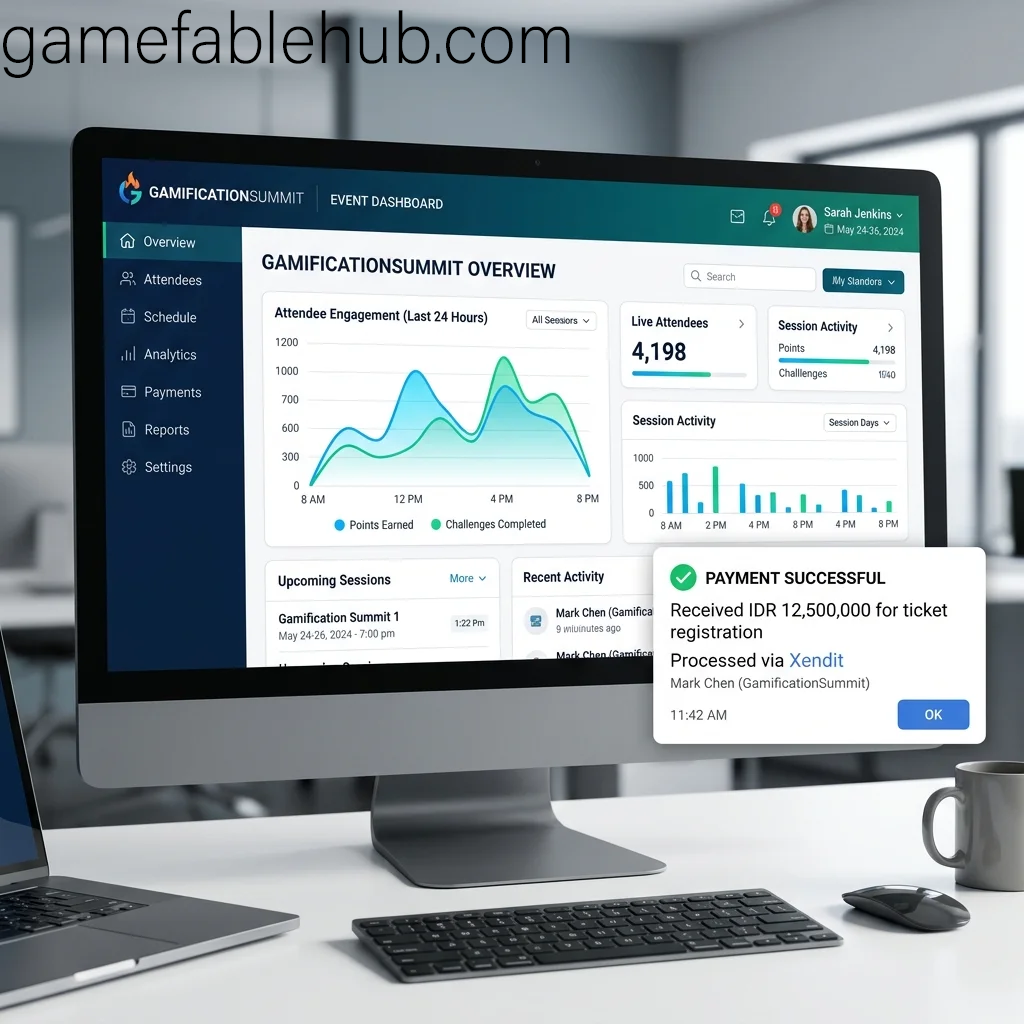
Xendit Work GamificationSummit explores how digital payment solutions and workplace gamification can support business innovation. By combining efficient payment processes with employee engagement strategies, businesses can improve workflows, encourage participation, and create better digital experiences for customers and employees.
Xendit is known for providing digital payment infrastructure that helps businesses accept payments and manage transactions. Gamification, meanwhile, applies elements commonly found in games, such as points, achievements, challenges, and rewards, to activities outside traditional gaming. When these concepts are considered together, they offer interesting possibilities for businesses seeking to improve customer experiences, encourage employee participation, and support digital transformation.
The phrase “Xendit Work GamificationSummit” can be explored through these connected themes. However, it should not automatically be treated as the official name of a verified event or a specific Xendit product. Understanding the underlying concepts provides a useful starting point for examining how technology, motivation, and business performance can work together.
Table of Contents
What Is Xendit?
Xendit is a financial technology company that provides payment infrastructure for businesses, particularly across Southeast Asia. Its services help companies accept and process digital payments, manage payment flows, and integrate payment functionality into websites, applications, and other digital platforms.
Traditional payment processes can create challenges for growing businesses. Companies may need to support different payment methods, manage transaction records, monitor payment status, and reconcile incoming funds. Handling these processes manually can consume valuable time and increase the possibility of errors.
Digital payment infrastructure helps businesses organize these activities more efficiently. Depending on the services available in a particular market and the company’s chosen integration, businesses can use payment APIs, dashboards, and related tools to connect their systems with payment services.
Xendit’s role is especially relevant to businesses that operate online or serve customers who prefer digital transactions. By integrating payment capabilities into their operations, companies can make it easier for customers to complete purchases and for internal teams to monitor payment activity.
Why Digital Payments Matter
Digital payments have become an important part of modern commerce. Customers increasingly expect convenient checkout experiences, clear transaction information, and reliable payment processing.
Businesses can benefit from digital payment systems in several ways:
- Convenience: Customers can access supported payment methods through digital channels.
- Operational efficiency: Automated payment processes can reduce repetitive administrative work.
- Transaction visibility: Digital records make it easier to review payment activity.
- Business integration: Payment services can connect with websites, applications, and other business systems.
- Customer experience: A well-designed payment process can reduce unnecessary friction during checkout.
These advantages depend on the quality of the implementation, the payment methods supported, and the needs of the business.
Understanding Work Gamification
Work gamification refers to the use of game-inspired elements in professional environments. It does not mean turning an entire workplace into a video game. Instead, it involves designing activities that make goals clearer, progress more visible, and participation more rewarding.
For example, a company might introduce a progress tracker for employee training, award recognition for completing learning modules, or create team challenges to encourage collaboration. These activities can help employees understand what they need to accomplish and see how their efforts contribute to a larger objective.
Gamification can also be applied to customer engagement, sales training, onboarding, professional development, and internal process improvement.
The central idea is simple: people are often more willing to participate in an activity when they understand its purpose, receive useful feedback, and can recognize their progress.
Common Gamification Elements
Several elements are commonly used in workplace gamification.
1. Points and progress tracking
Points can represent completed activities, learning milestones, or contributions toward a defined goal. A progress bar can help employees understand how far they have advanced through a training program.
2. Badges and achievements
Badges recognize the completion of specific milestones. For example, an employee might receive a digital certificate after completing cybersecurity training or mastering a new internal tool.
3. Challenges and missions
Challenges divide larger objectives into manageable tasks. A customer support team might participate in a week-long initiative focused on improving response quality rather than simply increasing the number of tickets closed.
4. Leaderboards
Leaderboards display progress or achievements among participants. They can encourage friendly competition, although they should be designed carefully to avoid discouraging employees who have different responsibilities or levels of experience.
5. Rewards and recognition
Rewards may include professional development opportunities, public recognition, team celebrations, or other appropriate incentives. The most effective rewards support meaningful contributions rather than encouraging people to chase numbers without considering quality.
How Xendit and Gamification Connect
Digital payments and gamification address different business needs, but they can complement each other in certain situations.
Xendit provides payment infrastructure, while gamification provides a framework for encouraging participation and recognizing progress. A business could potentially use a payment platform alongside a separate gamification system to create a more engaging digital experience.
For example, an online business could develop a customer loyalty program in which users earn points for eligible purchases, completing learning activities, or participating in a promotional campaign. A payment provider could support the transaction portion of the customer journey, while the loyalty application manages points, achievements, and rewards.
This does not mean Xendit automatically includes gamification features. The actual functionality would depend on the business’s application, integrations, and selected services.
Example: A Digital Retail Business
Imagine an online retailer that wants to improve customer engagement and encourage repeat purchases.
The company could create a loyalty program that rewards customers for specific actions. Customers might receive points after eligible purchases, unlock achievements after reaching milestones, or gain access to special offers after participating in a campaign.
A payment integration could help process qualifying transactions. Meanwhile, the retailer’s loyalty system could track customer progress and determine which rewards are available.
This approach could provide several benefits:
- A more engaging shopping experience.
- Clearer communication about loyalty rewards.
- Better visibility into customer participation.
- Opportunities to encourage repeat engagement.
- A structured way to measure campaign performance.
The retailer would still need appropriate systems for calculating rewards, handling refunds, protecting customer information, and communicating program terms.
Why GamificationSummit Is a Relevant Concept
The term “GamificationSummit” suggests a gathering or discussion focused on gamification, engagement strategies, and the practical use of game-inspired design. Without a verified event announcement, specific dates, speakers, or an official agenda should not be assumed.
Nevertheless, a summit centered on these themes could be valuable to business leaders, developers, human resource professionals, marketers, and product designers.
Such discussions can help organizations understand how gamification fits into broader digital transformation strategies. They can also provide opportunities to examine successful implementations, identify common mistakes, and compare different approaches to employee and customer engagement.
Topics That Could Be Explored
A business-focused gamification summit might address several important areas.
Employee motivation: How can organizations encourage participation without relying entirely on financial incentives?
Digital learning: How can progress tracking and interactive challenges make professional training more engaging?
Customer loyalty: How can businesses reward meaningful customer interactions while maintaining transparency?
Technology integration: How can gamification tools work with existing websites, applications, payment systems, and customer relationship platforms?
Data and measurement: Which indicators help organizations determine whether a gamification program is producing meaningful results?
Ethical design: How can businesses avoid manipulative incentives, excessive competition, and unnecessary collection of personal information?
These topics are relevant to companies exploring the relationship between digital infrastructure and human behavior.
Benefits of Gamification in the Workplace
When implemented thoughtfully, workplace gamification can support several organizational objectives.
1. Improved Employee Engagement
Employees may find it easier to stay involved when tasks have clear goals and progress is visible. A well-designed system can turn a large training program into a series of achievable milestones.
For instance, a new employee could complete onboarding activities in stages, receive feedback after each stage, and track the remaining requirements. This structure may make the process easier to understand.
However, badges and points alone cannot solve deeper workplace problems. Employees also need fair treatment, useful feedback, adequate resources, and realistic expectations.
2. More Effective Training
Training programs sometimes struggle because participants have difficulty maintaining attention or understanding how much they have learned.
Gamified learning can introduce quizzes, scenarios, progress indicators, and achievement milestones. These elements provide opportunities for employees to practice skills and receive immediate feedback.
A company introducing a new payment dashboard, for example, might build a training program in which employees complete sample tasks before using the system in their daily work.
The objective should be genuine learning rather than merely completing activities as quickly as possible.
3. Better Team Collaboration
Gamification can support teamwork when rewards are connected to shared objectives.
Instead of ranking every employee individually, a company could create team-based challenges focused on improving documentation, completing training, or identifying process improvements.
This approach can encourage employees to share knowledge and help colleagues succeed.
The design matters. If a challenge rewards speed alone, employees may sacrifice accuracy or cooperation. Balanced goals should consider both productivity and quality.
4. Greater Visibility Into Progress
Progress dashboards can help managers and employees identify completed tasks, outstanding requirements, and areas that need additional support.
For example, a dashboard might display training completion rates or show how a team is progressing toward a service-quality goal.
Such information can support planning and decision-making. At the same time, organizations should avoid treating every metric as a complete measure of employee performance.
Quantitative data is most useful when combined with context, feedback, and professional judgment.
Benefits of Digital Payment Integration for Businesses
Digital payment systems can support business operations independently of gamification. When integrated with other applications, they can also provide the transaction infrastructure needed for more advanced digital experiences.
Faster and More Organized Payment Workflows
Automated payment processing can reduce the need for manual transaction handling. Businesses can use transaction records to monitor payment status and support reconciliation.
This can be particularly useful for online merchants managing a high volume of orders.
Convenient Customer Experiences
Customers may prefer different payment methods depending on their location, habits, and access to financial services.
Supporting appropriate payment options can make the checkout process more convenient. Businesses should review the methods available through their payment provider and confirm regional requirements before designing their checkout experience.
More Structured Business Data
Digital transactions produce records that can support reporting and operational analysis.
Businesses may use this information to review payment success rates, investigate failed transactions, and identify points of friction in the checkout process.
When payment data is combined with other business information, organizations must maintain appropriate access controls and respect privacy obligations.
Practical Use Cases for Businesses
The relationship between digital payments and gamification can be explored across several industries.
E-Commerce and Retail
Retailers can combine payment processing with loyalty applications to support reward points, promotional milestones, and customer engagement campaigns.
For example, a store could recognize customers who complete a qualifying purchase or participate in an educational campaign about its products.
Reward eligibility, expiration dates, and redemption conditions should be communicated clearly.
Education and Online Learning
Education platforms can use progress tracking, quizzes, certificates, and achievement systems to support learning.
Where a course charges a fee, digital payment infrastructure can help the provider collect payments through supported channels. Gamification can then operate within the learning platform to recognize course progress.
The payment process and the learning experience remain separate functions, even when they work together.
Financial Technology Applications
Fintech businesses may use educational challenges to help users understand budgeting, digital transactions, and responsible financial habits.
For example, an application might provide progress milestones for completing financial literacy lessons.
Any rewards connected to financial activities should be designed carefully. Businesses must consider relevant regulations, transparent terms, privacy, and the risk of encouraging inappropriate financial behavior.
Employee Onboarding and Development
Organizations can build structured onboarding programs in which new employees complete tasks, learn internal procedures, and demonstrate understanding.
If a company uses digital payment systems, onboarding might include training on transaction monitoring, payment reconciliation, customer support procedures, and data security.
A gamified learning interface can help employees track their progress without changing the underlying payment technology.
Challenges and Limitations to Consider
Although gamification can be useful, it does not guarantee better performance. Poorly designed systems can create confusion, unnecessary competition, or pressure to prioritize scores over meaningful outcomes.
Overemphasis on Points
If employees are rewarded only for completing the largest number of tasks, they may rush through activities or ignore quality.
Organizations should establish balanced criteria that recognize accuracy, collaboration, customer satisfaction, and long-term improvement.
Unfair Competition
Leaderboards can be motivating for some employees but uncomfortable for others. Differences in job responsibilities, experience, workload, and access to resources may make direct comparisons unfair.
Team-based recognition and individual progress tracking can offer alternatives.
Privacy and Data Security
Digital payment systems handle sensitive transaction information, while gamification platforms may collect information about employee or customer behavior.
Businesses should collect only the information they need, limit access to authorized personnel, and explain how data will be used.
Payment information should be handled through appropriate security controls and compliant systems.
Integration Costs
Connecting payment infrastructure, loyalty software, analytics tools, and gamification applications may require technical development and ongoing maintenance.
Before investing, a company should identify its objectives, assess existing systems, and estimate implementation costs.
A simple program that solves a clearly defined problem may be more effective than a complex platform with many unnecessary features.
How to Implement a Gamification Strategy
Businesses interested in workplace gamification can follow a practical, step-by-step approach.
Step 1: Define a specific objective.
Choose a measurable goal, such as improving training completion, reducing avoidable processing errors, or increasing participation in a customer education program.
Step 2: Understand the participants.
Consider employees’ responsibilities, customers’ expectations, and the activities that genuinely matter to them.
Step 3: Choose appropriate game elements.
Use progress bars, milestones, challenges, badges, or team achievements where they support the objective. Avoid adding features simply because they look entertaining.
Step 4: Integrate the required technology.
Determine whether the project needs a learning platform, a loyalty application, analytics software, or payment integration. If Xendit is being considered, review its current documentation and supported services to establish whether it fits the particular payment requirements.
Step 5: Run a small pilot.
Test the system with a limited group before expanding it across the organization. Collect feedback and look for unintended effects.
Step 6: Measure meaningful outcomes.
Evaluate whether the program improves the original target. Consider quality, user satisfaction, participation, cost, and long-term results rather than relying on points or badge counts alone.
Step 7: Improve the program over time.
Use participant feedback and performance data to refine the system. Remove elements that create unnecessary complexity or fail to deliver measurable value.
The Future of Gamification and Digital Payments
Digital business tools continue to evolve, creating opportunities to connect payment experiences with personalized services, automated workflows, and interactive applications.
Businesses may increasingly explore ways to make customer journeys more transparent and engaging. For example, an application might show a customer the status of a qualifying purchase, explain available loyalty benefits, and provide a clear record of completed transactions.
Workplace applications may also use adaptive learning, interactive simulations, and progress dashboards to help employees develop new skills.
Artificial intelligence could support personalized learning recommendations and identify areas where users need additional guidance. However, these systems should be evaluated for accuracy, fairness, privacy, and the possibility of unintended bias.
The most useful innovations will not necessarily be the most complicated. Successful digital experiences usually begin with a real customer or employee need and use technology to address it clearly.
Conclusion
Xendit Work GamificationSummit provides a useful topic for exploring the relationship between digital payment infrastructure, workplace engagement, and gamification. Xendit helps businesses address payment-related needs, while gamification offers methods for making selected activities more engaging through progress tracking, challenges, achievements, and recognition.
Although these concepts can complement each other, they serve different purposes. A payment provider does not automatically provide a complete gamification platform, and a gamification system cannot replace reliable payment infrastructure.
Businesses should therefore evaluate their objectives, select appropriate tools, and measure results before combining these technologies. They should also prioritize data protection, fairness, accessibility, and meaningful user experiences.
Ultimately, the strongest digital strategies focus on solving real problems. By combining reliable technology with thoughtful design, organizations can create more efficient processes, improve learning experiences, and build stronger relationships with employees and customers.
Whether a business is exploring digital payments, employee development, or customer loyalty, understanding these concepts provides a practical foundation for making informed decisions about future innovation.
About the Author