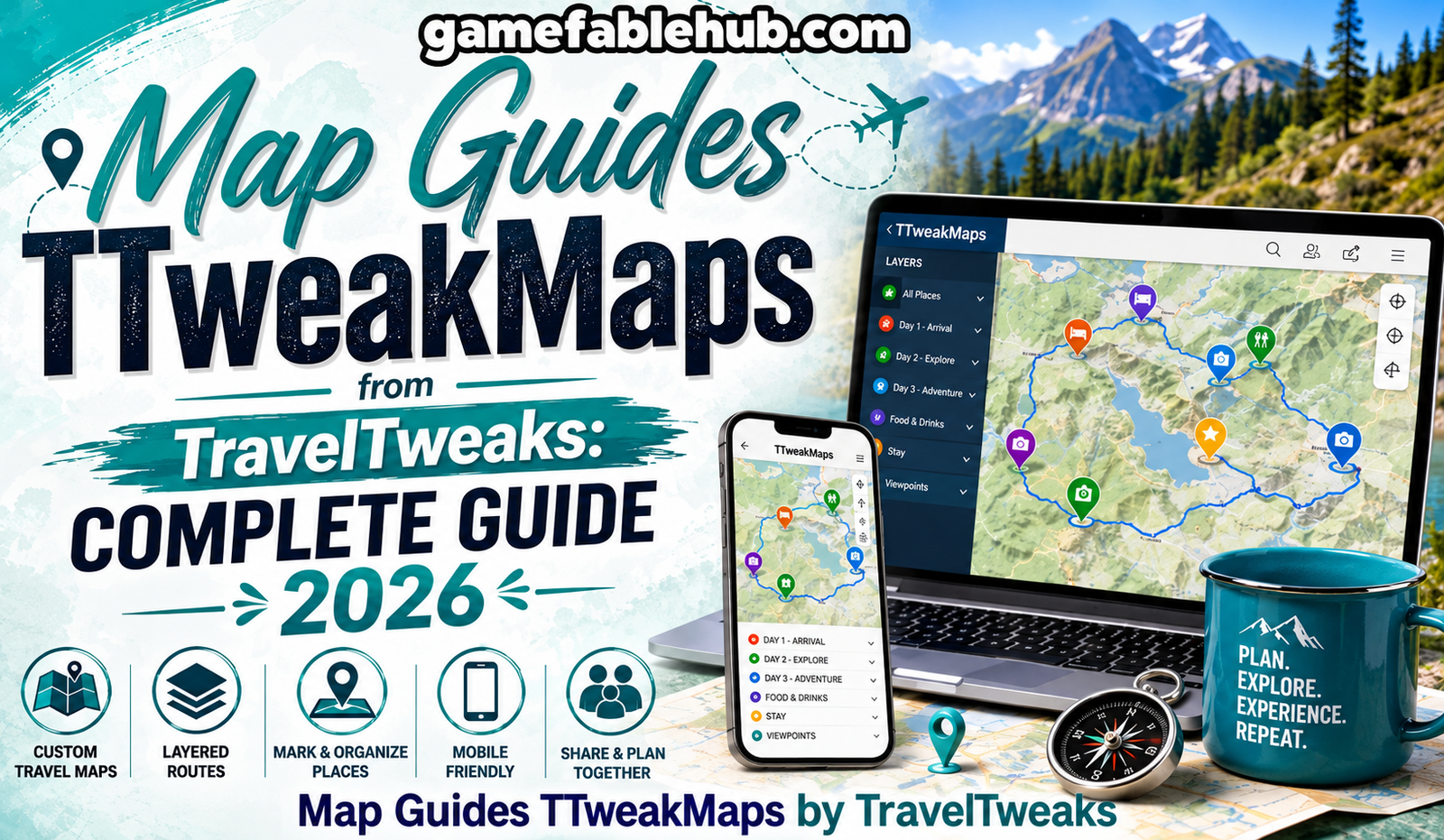
Map guides ttweakmaps by traveltweaks is a search phrase associated with TravelTweaks content about mapping, destination discovery, and travel planning. For Map guides ttweakmaps travelers, the practical appeal is straightforward: understanding where places are, how they connect, and how to arrange a trip without spending unnecessary time moving between them.
Table of Contents
A useful map guide can help turn a long collection of saved attractions into a manageable itinerary. Instead of choosing activities individually and worrying about directions later, you can consider location, travel time, and daily priorities together.
However, published descriptions of a travel tool should be distinguished from features you have personally confirmed. Before depending on app downloads, offline navigation, live updates, or account synchronization, check whether those functions are actually available through the service you are using.
This guide explains how to approach map-based planning and apply seven practical fixes to common travel problems.
Understanding Map Guides TTweakMaps by TravelTweaks
TravelTweaks has published articles presenting TweakMaps as a travel mapping resource with an emphasis on exploration and personalized planning. Readers searching this keyword may therefore be looking for an explanation of the name, practical mapping advice, or help organizing a journey.
The most useful starting point is to understand what a map guide contributes.
A destination article tells you which places might be interesting. A map shows where those places sit in relation to your accommodation, transport connections, and other activities.
Combine those perspectives and you can make better decisions about what belongs in the same day.
For example, a museum and a market may both deserve a visit. But if they sit on opposite sides of a large city, pairing them could create a tiring itinerary. A nearby gallery might make a more comfortable companion to the museum.
That geographic perspective is the foundation of effective travel planning.
Why a Good Map Matters Before You Travel
Travel plans often begin with excitement rather than geography.
You save a restaurant from a video, a viewpoint from a photograph, and a hotel from a booking search. Each choice looks appealing on its own.
The difficulty appears when you try to connect them.
Your hotel may be far from the neighborhood where you want to spend most evenings. A scenic attraction may require a separate excursion. A short-looking route may involve several transport changes.
Reviewing a map before booking helps reveal those relationships.
It also encourages realistic choices. You can compare convenience with accommodation costs, identify useful transport connections, and avoid treating every saved location as an essential stop.
The aim is to create days that feel enjoyable on the ground.
1. Fix Scattered Plans by Creating One Location List
One common planning problem is having useful information spread across messages, screenshots, notes, and browser tabs.
Start by collecting the locations you genuinely want to consider.
Your first list might include:
- Accommodation and arrival points.
- Main attractions.
- Restaurants and cafés.
- Transport stations.
- Optional activities.
- Useful services near your accommodation.
Then check each place carefully. Similar business names and multiple branches can lead to mistakes.
Record the full address where possible, along with a short note explaining why you saved it. “Good lunch option near the museum” is more useful than a restaurant name you no longer recognize.
Use saved places or custom lists if your chosen mapping service supports them. Otherwise, a simple written list organized by neighborhood can still work well.
The important improvement is having one dependable reference.
2. Fix Wasted Travel Time by Grouping Nearby Stops
Once you have collected your locations, look for natural clusters.
A historic district might contain a museum, a public square, several cafés, and an evening restaurant. Those places could form a comfortable day without requiring repeated journeys across the city.
This approach is particularly useful when exploring map guides ttweakmaps by traveltweaks because it connects destination research with practical route planning.
Start with one main activity. Then examine what sits nearby.
You might build a day around a morning gallery visit, lunch in the surrounding neighborhood, and an afternoon walk through a nearby park.
Do not judge convenience by straight-line distance alone. A river, railway, steep hill, or limited crossing can make apparently close places harder to reach.
Check the actual route before deciding that two attractions belong together.
3. Fix Overloaded Days with Realistic Time Allowances
A map can show you how to reach a destination, but it cannot determine how much energy you will have when you arrive.
Overloaded itineraries often leave too little room for queues, meals, breaks, and ordinary delays.
Separate each day into three kinds of time:
- Activity time: Visiting the attraction or enjoying the experience.
- Travel time: Walking, waiting, changing transport, and finding entrances.
- Flexible time: Resting, handling delays, or making an unplanned stop.
Suppose a museum visit takes two hours. You may also need time to reach it, enter, store a bag, and leave. Scheduling another reservation immediately afterward creates unnecessary pressure.
Choose one or two priorities for the day and treat the remaining stops as optional.
A shorter plan often gives you more freedom to enjoy the places you actually visit.
4. Fix Transport Confusion by Comparing the Full Journey
The fastest route displayed on a screen is not always the easiest route for your circumstances.
A journey with several changes may be inconvenient when carrying luggage. A walk may look manageable until you notice steep streets or uncomfortable weather.
Compare the whole journey rather than a single travel-time estimate.
For public transport, consider walking to the station, waiting, transfers, and the walk from the final stop.
For driving, consider parking, restrictions, and the distance between the parking area and the entrance.
For walking, consider crossings, gradients, rest opportunities, and the needs of everyone in your group.
A slightly longer direct route may be preferable to a shorter journey with several unfamiliar changes.
Choose transport according to the day’s purpose and your group’s comfort.
5. Fix Fragile Plans by Preparing Backup Information
An itinerary becomes fragile when every useful detail depends on an active internet connection.
Before departure, save the information you would need if a page stopped loading.
Useful items include your accommodation address, reservation details, arrival instructions, and the names of important transport stops.
Check whether your mapping service supports offline downloads for the destination and travel mode you need. Do not assume that saved places, downloaded maps, live transport information, and offline directions all work in the same way.
Test essential information before leaving a reliable connection.
A screenshot can help you recognize a neighborhood, but it is not a substitute for a detailed navigation resource where terrain or route finding matters.
For ordinary city travel, even a written hotel address can make an unexpected connection problem easier to handle.
6. Fix Disappointing Visits by Checking Practical Details
A location pin tells you where something is. It does not necessarily tell you whether visiting it fits your plans.
Before placing an attraction into a fixed itinerary, check its opening schedule, booking requirements, entrance location, and any relevant access restrictions.
Also consider whether the visit depends on conditions.
An outdoor viewpoint may be less appealing in poor visibility. A market may operate only on certain days. A building may have several entrances serving different visitors.
Add brief notes beside important stops:
“Advance booking required.”
“Confirm opening hours before departure.”
“Entrance is on the opposite street.”
These small details make your plan easier to use.
When researching map guides ttweakmaps by traveltweaks, apply the same standard to any recommendation: confirm the details that could affect your actual visit.
7. Fix Rigid Itineraries with Nearby Alternatives
A good itinerary allows you to change direction without rebuilding the entire day.
Choose one nearby alternative for each major activity.
If your outdoor walk becomes uncomfortable, an indoor attraction in the same area might provide an easy replacement. If a restaurant has a long wait, a second option nearby can prevent a frustrating search.
Keep alternatives geographically practical.
A backup attraction across the city may create more work than it saves.
It also helps to separate essential experiences from optional ones. A prepaid event may determine the structure of the day, while a café visit can move or disappear.
This approach preserves flexibility without leaving every decision until the last minute.
You still have a plan, but the plan can respond to the trip.
A Practical Example of a Map-Based Travel Day
Imagine arriving in an unfamiliar city for a short weekend.
You want to visit a museum, explore an older neighborhood, see a riverside area, and enjoy a relaxed dinner.
First, locate your accommodation and identify how you will reach it from your arrival point.
Next, check which attractions are close enough to combine comfortably. Perhaps the museum and older neighborhood fit together, while the riverside area makes more sense on the following day.
Build the first day around the museum’s confirmed entry time. Leave space afterward for lunch and neighborhood exploration.
Choose dinner near either the final activity or your accommodation.
Before leaving, save the return route and accommodation address.
This creates a day with a clear direction while leaving room for breaks and discoveries.
How Families Can Adapt the Same Method
Families often need more than an efficient route.
The useful question is whether the day works for everyone traveling.
A route that looks easy for one adult may become tiring with young children, a pushchair, or relatives who need regular breaks.
When planning, consider toilets, seating, meal options, and manageable distances between stops.
Put the most important activity at a time when the group is likely to have enough energy. Avoid building the day around repeated transport changes unless they are necessary.
Keep one easy stopping point in mind. That might be a park, a café, or a return to the accommodation.
The goal is not to fit the greatest number of attractions into the day. It is to make the shared experience comfortable enough to enjoy.
How Map Planning Can Help Control Spending
A map does not guarantee a cheaper trip, but it can reveal choices that affect your budget.
Accommodation with a lower nightly price may require more daily transport. A convenient location may cost more upfront but reduce travel time and some journey costs.
Compare the overall arrangement.
Consider where you expect to spend your mornings and evenings, which transport services you will use, and whether your plans involve repeated cross-city travel.
You can also identify practical meal options near planned activities instead of making every food decision while tired or rushed.
Keep estimates realistic and check actual prices before booking.
Map planning is most useful financially when it helps you recognize the full cost of a location decision.
Common Mistakes to Avoid
Saving Too Many Places
A crowded map can make every stop seem equally important. Keep a short priority list and move other ideas into an optional category.
Ignoring the Return Journey
Check how you will get back, especially after a late activity. The outward route may not operate in the same way later.
Assuming Every Feature Is Available
Published descriptions do not guarantee current support for every destination or device. Confirm the functions you intend to rely on.
Treating Estimates as Appointments
Travel times are estimates. Leave extra room before reservations, departures, and other fixed commitments.
Planning Without the Group
Discuss walking tolerance, meal preferences, and priorities before finalizing a shared itinerary. A workable plan reflects the people using it.
Frequently Asked Questions
What are map guides ttweakmaps by traveltweaks?
The phrase refers to TravelTweaks-related content about TweakMaps, mapping, destination exploration, and travel planning. Confirm specific product capabilities directly before relying on them.
Is TweakMaps definitely available as a downloadable app?
Articles describe app-style functionality, but that alone does not verify a current official download. Confirm the publisher, listing, and availability before installing anything.
Can these guides help with a first trip?
Map-based planning can help first-time visitors understand neighborhoods, organize attractions, and prepare arrival information. Its usefulness depends on the accuracy of the information used.
Can I use the maps without internet?
That depends on the particular service and supported features. Check offline coverage and test the information you need before departure.
How many activities should I plan each day?
There is no universal number. Begin with one or two priorities, then add optional nearby stops according to travel time, energy, and personal interests.
Conclusion
The practical value of map guides ttweakmaps by traveltweaks lies in connecting travel ideas with realistic geography.
Collect your important locations, group nearby activities, compare complete journeys, and confirm the details that could change your day. Prepare essential information in advance and keep alternatives close enough to be useful.
Those habits turn a collection of attractive places into a trip you can comfortably enjoy.
About the Author