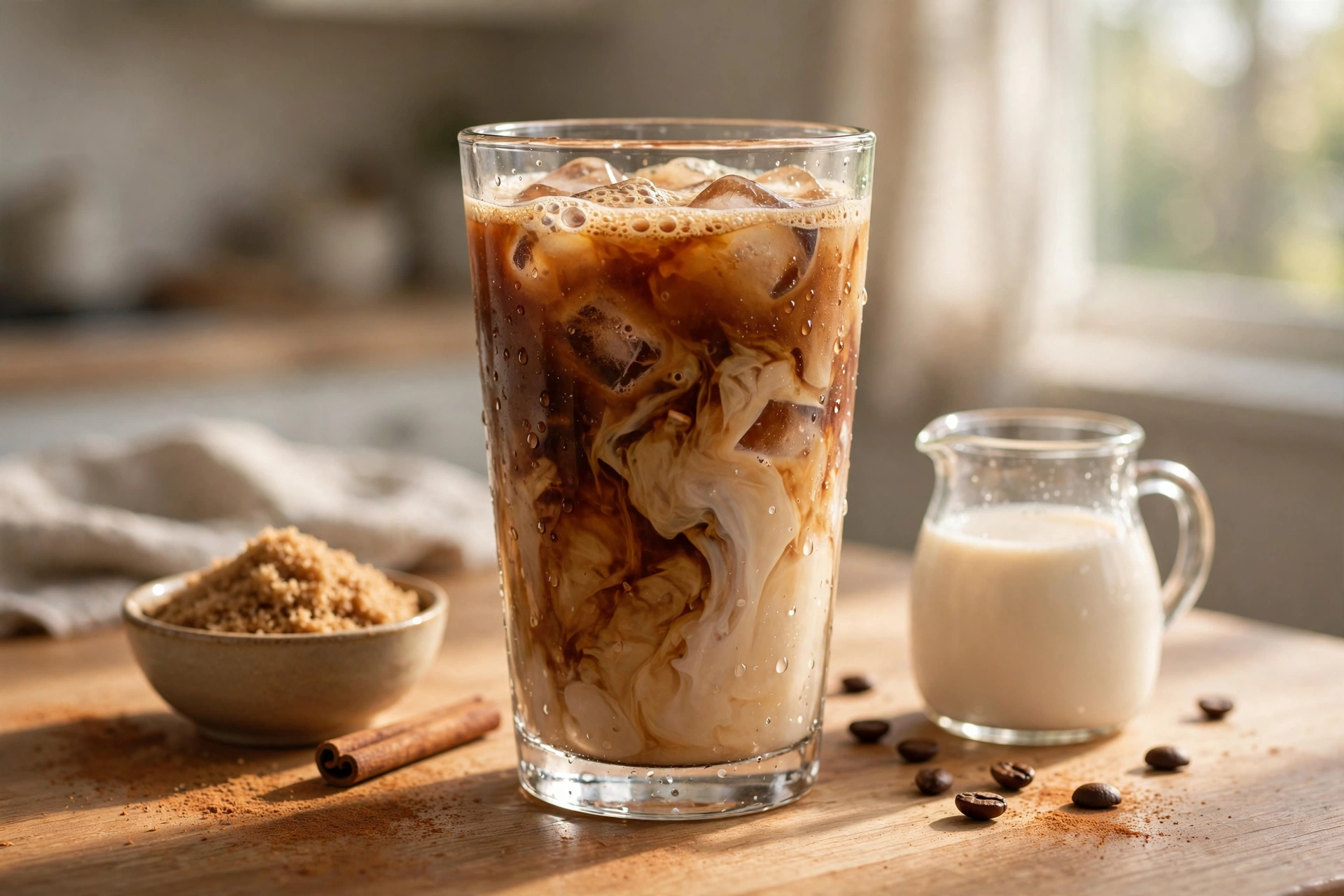
The first time I made a brown sugar oatmilk shaken espresso at home, I expected it to taste like ordinary iced coffee with a little extra sweetness. Instead, I got a bold, cinnamon-scented coffee with a smooth oat milk finish and a lovely layer of tiny bubbles on top. It was the kind of drink that made me wonder why I had been spending so much time trying to recreate my favorite coffee-shop orders.
Table of Contents
What makes this drink special is the combination of espresso, brown sugar, cinnamon, oat milk, and ice. Each ingredient has a job to do, and the shaking process brings everything together in a way that feels different from simply pouring cold milk into a glass of coffee.
After experimenting with the sweetness, coffee strength, and amount of oat milk, I found a version that is easy to prepare in an ordinary kitchen without professional equipment. It is not an exact copy of every cafe’s recipe, but it captures the flavor and texture I enjoy most.
In this guide, I will walk you through my favorite method, explain which ingredients make the biggest difference, and share a few adjustments that help you get the drink just right.
What Is a Brown Sugar Oatmilk Shaken Espresso?
A brown sugar oatmilk shaken espresso is an iced coffee drink made by combining espresso, brown sugar, cinnamon, ice, and oat milk. Instead of simply stirring everything together, you shake the coffee with ice to chill it quickly and create a lighter, slightly frothy texture.
The brown sugar gives the drink a rounded sweetness with hints of molasses. Cinnamon adds warmth, while espresso provides the deep roasted flavor that keeps the drink from tasting like a glass of sweetened milk.
Oat milk is important, too. Depending on the brand, it can taste lightly sweet, creamy, nutty, or almost cereal-like. Those qualities complement the brown sugar particularly well, creating a drink that feels richer than plain black iced coffee without necessarily needing dairy cream.
The drink is associated with Starbucks, where its iced version uses blonde espresso, brown sugar flavor, cinnamon, ice, and oat milk. Home recipes can vary in their ratios and preparation methods, so I prefer to focus on the essential flavor combination instead of trying to reproduce every detail of a particular cafe serving.
For a useful reference, you can compare my approach with Starbucks’ official at-home shaken espresso recipe.
My version is designed for one generous glass. It is straightforward enough for a weekday morning but still feels like a little treat when I have time to make coffee slowly.
One thing worth understanding is that this is an espresso-based drink, not simply cold brew with oat milk. Espresso is concentrated coffee brewed under pressure, so even a small amount contributes plenty of flavor. If you do not own an espresso machine, there are alternative brewing methods that can produce a suitably strong coffee base.
Why Is Everyone Obsessed With This Drink?
For me, the appeal comes down to balance. Some iced coffees are so sweet that the coffee flavor disappears, while others are so bitter that I immediately want to add more milk. This drink sits somewhere in the middle when the proportions are right.
Brown sugar is the first reason it works. It has a deeper flavor than plain white sugar because it contains molasses. That does not mean it automatically tastes dramatically different in every drink, but its subtle caramel-like notes work beautifully with roasted coffee.
Cinnamon adds another layer. It gives the espresso a warm, almost bakery-like aroma without requiring a flavored syrup or a long list of ingredients. I like the way that aroma comes through when the cold drink is first poured into a glass.
Then there is the oat milk. It softens the sharp edges of the espresso, making each sip smoother while allowing the coffee to remain noticeable. I find that an unsweetened variety provides the most flexibility because I can control the sweetness with the brown sugar.
The shaking method is another big part of the experience. Shaking espresso with ice creates a chilled drink with a lightly aerated texture. You may see small bubbles or a thin foam on the surface, particularly when you shake vigorously and pour immediately.
I also appreciate that the recipe is easy to customize. A little less sugar creates a stronger coffee flavor, while extra oat milk makes the drink softer and creamier. You can change the coffee beans, use a different roast, or add another espresso shot if you prefer a more pronounced coffee taste.
Finally, the ingredients are relatively simple. You do not need several flavored syrups, fancy garnishes, or a complicated blending process. Once you have made it two or three times, the routine becomes quick and familiar.
That simplicity is probably my favorite part. It feels like a cafe-style drink, but the final result depends on ingredients and proportions I can control myself.
What You Need: Ingredients and Tools
The following recipe makes one generous serving. These measurements are a starting point rather than strict rules, particularly when it comes to the amount of oat milk.
Ingredients
2 shots of espresso
Freshly brewed espresso provides the strongest and most recognizable coffee flavor. I like a smooth roast that has chocolatey, nutty, or lightly caramel-like notes. A blonde or light roast can work particularly well if you enjoy a gentler, less smoky flavor.
If your coffee tastes very bitter, try a different bean or adjust the extraction before adding more sugar. Sweetness can soften bitterness, but it cannot completely fix an unpleasant coffee base.
2 teaspoons of light brown sugar
This is enough to give the drink noticeable sweetness without making it taste like a dessert. You can start with one teaspoon if you generally prefer unsweetened coffee.
Light brown sugar dissolves more easily when stirred into hot espresso. Dark brown sugar also works, although its stronger molasses flavor may become more noticeable.
6 ounces of unsweetened oat milk
That is three-quarters of a cup. Choose an oat milk you enjoy drinking on its own because its flavor and texture will carry through into the finished coffee.
Barista-style oat milk is a useful option when you want a creamier result, but regular oat milk is perfectly suitable. If your chosen brand is already sweetened, begin with less brown sugar and taste before adding more.
Approximately 1½ cups of ice
Ice chills the coffee and helps create the shaken texture. Larger cubes are convenient because they are easy to handle, while smaller cubes can chill a drink quickly but may melt faster during vigorous shaking.
A small dash of ground cinnamon
Start with a light sprinkle rather than a heaped spoonful. Cinnamon should complement the coffee, not overwhelm it.
Tools
You will need an espresso machine or an alternative way to brew concentrated coffee, a heatproof cup, a measuring spoon, a cocktail shaker or sturdy jar with a secure lid, and a serving glass.
A cocktail shaker is convenient, but I would not buy one solely for this recipe. A clean, sturdy jar with a tightly fitting lid can work just as well, provided it is suitable for the task and has enough room for the ice and liquid to move around.
A spoon is useful for dissolving the brown sugar, and a small measuring cup helps you keep the proportions consistent.
If you are setting up a practical home coffee station, it helps to keep your ingredients easy to find and your equipment clean. I like simple kitchen routines in general, whether I am preparing a morning coffee or learning everyday food-storage habits such as how to store potatoes so they don’t sprout.
The goal is not to collect special equipment. It is to make a drink you genuinely enjoy with tools you already have.
How to Make It at Home, Step by Step
Once the ingredients are ready, the process is simple. The most important details are dissolving the sugar properly, shaking the coffee thoroughly, and adding the oat milk in a way that preserves the drink’s texture.
Step 1: Brew the espresso
Prepare two shots of espresso using your preferred beans. If you have an espresso machine, follow its usual brewing process and use freshly ground coffee when practical.
I recommend beginning with a coffee that tastes good without much sugar. A balanced espresso with chocolate, caramel, or nutty notes gives the brown sugar and cinnamon something to complement.
If you are using a moka pot or another brewing method, make a concentrated coffee rather than a large mug of regular-strength coffee. The result will not technically be espresso unless it is brewed under espresso-making conditions, but a concentrated coffee base can still make a satisfying homemade version.
Avoid letting freshly brewed coffee sit around until it becomes completely cold. The next step is easier while the espresso is still hot.
Step 2: Dissolve the brown sugar
Add two teaspoons of light brown sugar to the hot espresso. Stir until the sugar has dissolved as thoroughly as possible.
This is a small step, but it makes a noticeable difference. Brown sugar does not always dissolve readily in a cold drink, especially when it is added directly over ice. Undissolved grains can settle at the bottom, leaving the first few sips less sweet than the last.
Taste a tiny amount of the sweetened espresso before moving on. The coffee should still taste distinctly like coffee, with the sugar rounding out its stronger edges.
If you prefer a less sweet drink, use one teaspoon to begin with. It is easier to add a little more sweetness now than to correct an overly sugary drink later.
Step 3: Add the cinnamon
Sprinkle a small dash of ground cinnamon into the sweetened espresso and stir again.
I keep the amount modest because too much cinnamon can dominate the entire drink. It may also collect in small specks rather than dissolving completely, which is normal for ground spices.
You can reserve an additional pinch for the top of the finished drink if you enjoy the aroma. I find that the cinnamon is most pleasant when it provides a subtle background note rather than becoming the main flavor.
Step 4: Fill your shaker with ice
Add approximately one and a half cups of ice to your cocktail shaker or sturdy jar.
Pour the sweetened espresso mixture over the ice. Secure the lid before shaking, and make sure the container is appropriate for handling the cold liquid and ice.
If you are using a glass container, do not assume every glass jar is safe for sudden temperature changes. A suitable shaker or sturdy container designed for this kind of use is the better choice.
At this point, the coffee will begin cooling rapidly. Some dilution from melting ice is expected, and a little dilution is part of what makes the finished drink refreshing instead of intensely concentrated.
Step 5: Shake vigorously
Shake the espresso and ice for about 15–20 seconds as a practical starting point. You want the mixture to become thoroughly chilled, with some small bubbles forming on the surface.
The exact time is not a magic number. The amount and size of the ice, the temperature of the coffee, and the strength of your shaking all affect the result.
Do not shake a hot, sealed container without first making sure it is designed for the task. Adding hot liquid to a closed container can create pressure, so use an appropriate shaker and follow its instructions.
After shaking, the coffee should look slightly lighter and may have a thin foamy layer. That texture is one of the reasons I prefer shaking over simply stirring the ingredients in a glass.
Step 6: Pour the coffee into your glass
Pour the chilled espresso mixture, including the ice, into a tall serving glass. There is no need to strain it for an everyday homemade version.
If you prefer less dilution, you can use fresh ice in the serving glass and strain the shaken coffee over it. However, that is an optional adjustment rather than a requirement.
I usually keep the original ice because it makes the process simpler and gives the drink its familiar iced-coffee appearance.
Step 7: Add the oat milk
Pour in approximately six ounces of unsweetened oat milk. You can add a little less initially and increase the amount until the balance feels right.
For a layered look, pour the milk slowly over the coffee and let it spread naturally. A gentle swirl will combine the layers without eliminating every bit of the visual contrast.
For a more evenly blended drink, stir briefly before drinking. Both approaches are good; the decision comes down to whether you prefer a layered appearance or a consistent flavor from the first sip.
Step 8: Finish with cinnamon and taste
Add a small dash of cinnamon on top if you like, then taste the drink.
If it is too strong, add a splash more oat milk. If it is too sweet, make a note to reduce the brown sugar next time rather than trying to solve everything with extra coffee. If the flavor is too mild, consider using a more concentrated coffee base.
I would also give the drink a moment to settle before deciding whether you need to make adjustments. The flavors can seem slightly different once the ice has cooled the coffee fully and the oat milk has mixed through.
That is it. You have a homemade brown sugar oatmilk shaken espresso without a long list of ingredients or a complicated preparation process.
My Honest Taste Test: Home vs Cafe
My favorite thing about the homemade version is how easy it is to adjust. I can control the amount of sugar, use the oat milk I like, and choose coffee beans that suit my taste. When the proportions are right, the drink has a strong coffee foundation, gentle brown sugar sweetness, and a creamy finish.
The first flavor I notice is usually the espresso. The brown sugar comes through next, adding a soft caramel-like quality, while the cinnamon makes the aroma warmer. The oat milk smooths everything out without needing to turn the drink into a particularly milky coffee.
Texture is where the homemade version can be surprisingly satisfying. Shaking creates a lightly aerated surface that makes the coffee feel a little more interesting than an ordinary iced espresso with milk. It is not necessarily a thick, stable foam, and I would not expect it to remain unchanged for a long time.
A cafe version may taste different because the coffee blend, espresso recipe, syrup concentration, ice quantity, oat milk, and serving proportions can vary. Professional equipment also gives baristas a consistent way to prepare espresso, which can be difficult to reproduce perfectly at home.
That does not mean the homemade drink automatically tastes better. A well-made cafe version has advantages, particularly if the shop uses excellent beans and the barista gets the balance right. On the other hand, a cafe drink that is sweeter than I prefer will never be quite as enjoyable to me as one I make to my own taste.
My homemade version wins on flexibility and convenience when I already have the ingredients in my kitchen. The cafe wins when I want someone else to prepare it and do not feel like cleaning anything afterward.
Would I call it better than the cafe? Sometimes, for my personal taste. More importantly, I can make a version I enjoy without trying to match another person’s exact recipe.
Tips for Getting the Brown Sugar Flavor Just Right
The brown sugar should enhance your coffee, not bury it. These are the adjustments I pay attention to most when a batch does not taste quite right.
Dissolve the sugar while the espresso is hot. This is my first rule. Adding dry brown sugar straight into a glass full of ice often leaves some grains behind, especially if you do not stir long enough.
Start with light brown sugar. Light brown sugar generally gives a gentler molasses note than dark brown sugar. If you enjoy a deeper, more pronounced caramel-like flavor, you can experiment with the darker variety.
Try a simple brown sugar syrup. If you regularly make this coffee, combine equal amounts of brown sugar and water in a small saucepan and warm gently, stirring until the sugar dissolves. Let the syrup cool before using it in iced drinks. Store it in a clean, covered container in the refrigerator, follow sensible food-storage practices, and discard it if you notice signs of spoilage. The syrup is convenient because it mixes readily into cold beverages.
You do not need syrup to make a good drink, though. Dissolving granulated brown sugar in hot espresso is a perfectly practical option for one serving.
Choose cinnamon carefully. Start with a small pinch. Fresh, aromatic cinnamon usually contributes more than simply adding a larger quantity of an older spice.
Pay attention to your oat milk. Some brands have an inherently sweet flavor, while others taste more neutral. Barista-style varieties may feel creamier, but they are not all identical. Read the label if sweetness or ingredients matter to you.
Do not use extra sugar to fix every bitter cup. If your espresso is harsh, try adjusting the grind, brewing method, coffee choice, or extraction time where possible. Brown sugar should provide balance, not hide a coffee base you dislike.
Taste before adding more milk. Too much oat milk can cover up the espresso and cinnamon. Add it gradually until you find the point where the drink feels creamy but still tastes like coffee.
Finally, remember that ice changes the flavor as it melts. A drink that tastes strong immediately after preparation can become milder after several minutes. Making it slightly more concentrated at the start may help if you tend to sip your coffee slowly.
Easy Variations (Iced, Less Sweet, Extra Shot)
Once you know the basic recipe, you can make a few small changes without learning an entirely new method.
For a classic iced version: Follow the main recipe, shaking the espresso, brown sugar, cinnamon, and ice together before adding oat milk. Use the same basic ingredients and adjust only the proportions to suit your glass.
For a less-sweet version: Reduce the brown sugar from two teaspoons to one, or start with half a teaspoon if you prefer coffee with very little sweetness. Unsweetened oat milk makes it easier to control the final flavor. You can always add a little more sugar after tasting.
For a stronger coffee flavor: Use a more concentrated espresso or reduce the oat milk slightly. If you enjoy an additional espresso shot, add one while keeping in mind that more espresso also means more caffeine. The strength will depend on the beans and brewing method.
For a creamier version: Choose a barista-style oat milk or add a small extra splash of your usual oat milk. Make the change gradually so the coffee remains noticeable.
For a deeper brown sugar flavor: Use dark brown sugar or a little homemade brown sugar syrup. Dark brown sugar brings a more pronounced molasses note, so begin with the same quantity and adjust only after tasting.
For a stronger cinnamon aroma: Add a tiny extra pinch before shaking or dust a little over the finished drink. I prefer not to add too much directly to the liquid because ground cinnamon does not dissolve like sugar.
For a drink without an espresso machine: Use concentrated coffee prepared with a moka pot or another brewing method that can produce a strong result. The taste and texture will differ from true espresso, but the brown sugar, cinnamon, ice, and oat milk still create a similar flavor profile.
You can also experiment with different coffee roasts. A lighter roast may taste brighter, while a medium roast can offer chocolatey or nutty notes. Darker roasts often bring more pronounced roasted flavors. There is no universally correct choice; the best beans are the ones you enjoy drinking with the other ingredients.
How Much Does It Cost to Make at Home?
The cost depends on the coffee beans you buy, the price of oat milk where you live, how much brown sugar you use, and whether you already own the equipment.
I would not give one fixed price for this recipe because grocery prices and cafe menus vary by location, serving size, brand, and date. Instead, I find it more useful to calculate the cost of the ingredients that actually go into one glass.
Start with the price of your coffee beans or espresso capsules. Estimate how much you use for two shots and divide that amount by the total quantity in the package. If you use a moka pot or another brewing method, calculate the coffee portion in the same way.
Next, take the cost of your oat milk carton and divide it by the number of six-ounce servings it provides. Add the small amount of brown sugar and cinnamon you use, along with an allowance for ice if you buy it rather than making it at home.
The result is a rough ingredient cost per drink. For a more realistic comparison, you can also include disposable cups, lids, or other supplies if you regularly use them.
Equipment deserves a separate calculation. An espresso machine or grinder can represent a significant initial purchase, so I would not count the entire cost of a new machine as though it belonged to one glass of coffee. Instead, consider how often you expect to use it and whether it serves other purposes in your kitchen.
Compare your calculated homemade cost with the price of the equivalent drink at your local cafe. If you already own the equipment and regularly drink espresso, making it at home may offer better value over time. If you need to buy several expensive items just for this drink, the difference may be less attractive.
For me, another benefit is avoiding waste. I can make exactly one serving, adjust the sweetness, and use my preferred oat milk without paying for a drink that does not quite suit my taste.
Conclusion
Making a brown sugar oatmilk shaken espresso at home is much easier than I originally expected. With espresso, brown sugar, cinnamon, oat milk, ice, and a suitable shaker, you can create a refreshing coffee that captures the drink’s essential flavor without complicated equipment.
My biggest lessons are simple: dissolve the sugar while the espresso is hot, shake the coffee and ice thoroughly, and add oat milk gradually until the balance feels right. Small changes to those steps can make a noticeable difference.
I also would not get too caught up in making the recipe identical to a particular cafe’s version. Different coffee beans, milk brands, and serving proportions naturally produce different results. What matters most is finding a combination that tastes good to you.
Start with the measurements in this guide, then adjust the sweetness or milk on your next attempt. Once you have the balance figured out, it becomes an easy drink to prepare whenever you want something colder and more interesting than ordinary iced coffee.
Frequently Asked Questions
Does a brown sugar oatmilk shaken espresso have caffeine?
Yes. Espresso naturally contains caffeine, and the amount depends on the beans, brewing method, and number of shots used. For a specific estimate, check the coffee packaging or the cafe’s published nutrition information.
Can I make it without an espresso machine?
Yes. A moka pot or another method for brewing concentrated coffee can work as an alternative. The result will not be identical to machine-made espresso, but it can still create a flavorful drink when combined with brown sugar, cinnamon, ice, and oat milk.
Why is it shaken instead of stirred?
Shaking chills the espresso quickly and introduces air, creating a lightly aerated texture and small bubbles on the surface. Stirring combines the ingredients but does not produce quite the same texture.
How do I make it less sweet?
Reduce the brown sugar to one teaspoon or less and use unsweetened oat milk. You can always add a small amount of sugar after tasting, but starting with less makes it easier to keep the coffee flavor prominent.
What does a brown sugar oatmilk shaken espresso taste like?
It tastes like bold iced espresso softened by creamy oat milk, with gentle molasses-like sweetness and a warm cinnamon aroma. The exact flavor depends on your coffee roast, oat milk, and the amount of brown sugar you use.
About the Author







2 thoughts on “Brown Sugar Oatmilk Shaken Espresso: My Honest At-Home Recipe (Better Than the Cafe?)”