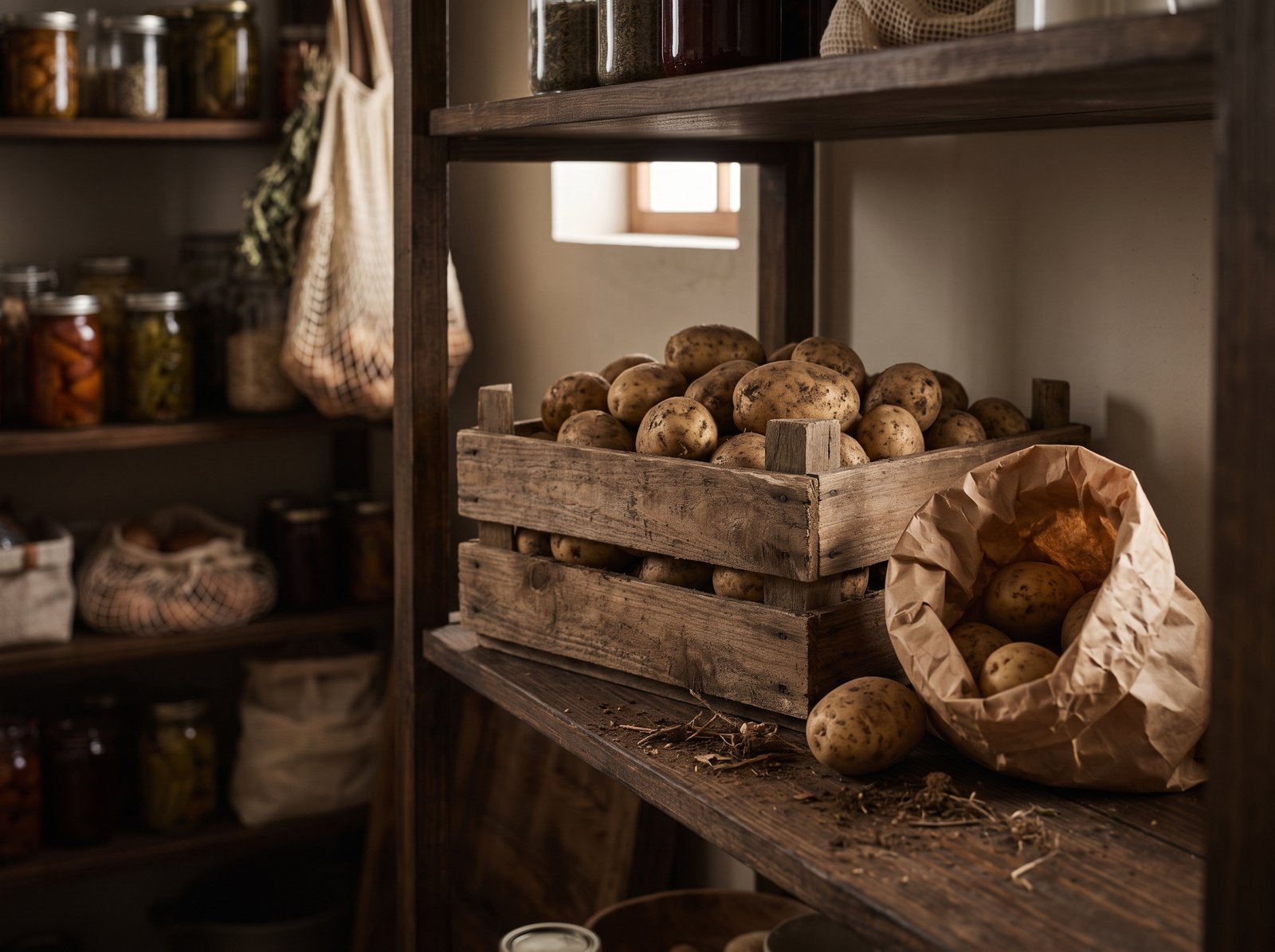
I learned how to store potatoes so they don’t sprout after opening one too many bags and finding pale little shoots poking out of the eyes. Sometimes the potatoes also developed green patches, became soft, or started looking less appetizing than when I brought them home. It was frustrating, especially when I had bought a large bag to save myself a few trips to the grocery store.
Table of Contents
The good news is that storing potatoes properly doesn’t require expensive equipment or complicated tricks. A few simple habits can make a real difference: keep them away from light, choose a cool location, provide enough airflow, and check the bag regularly.
I’ve also learned that some popular storage tips aren’t as helpful as they sound. Putting an apple in with your potatoes, for example, isn’t a reliable way to prevent sprouting. In fact, it can have the opposite effect.
Here’s how I would store a large bag of potatoes at home, what I would avoid, and how to decide whether older potatoes are still suitable for cooking.
Why Potatoes Sprout in the First Place
Potatoes are living plant tubers. Their eyes are growth points that can eventually produce shoots under suitable conditions. Sprouting is simply part of the process that allows a potato to grow into a new plant.
The problem starts when the conditions in your kitchen or pantry encourage that growth. Warm temperatures, exposure to light, and time can all contribute to potatoes developing sprouts. Poor storage conditions can also lead to shriveling, soft spots, and spoilage.
I used to assume that potatoes would stay fresh for weeks wherever I put them, provided I left the bag unopened. Unfortunately, keeping the bag closed doesn’t stop natural sprouting. If the potatoes are stored somewhere warm or exposed to daylight, they can still begin growing shoots.
Light also causes another problem: green skin. That green color comes from chlorophyll, but it can indicate that potentially harmful natural compounds called glycoalkaloids have increased as well. These compounds are concentrated in greater amounts in green areas, sprouts, and the eyes of potatoes.
That is why I pay attention to both sprouting and color instead of judging a potato only by whether it feels firm.
The aim isn’t to stop potatoes from changing forever. No ordinary home-storage method can guarantee that. It’s to slow down the process and keep the potatoes in good condition for as long as practical.
The Perfect Storage Spot: Dark, Cool, and Airy
If there’s one thing I would change first when dealing with sprouting potatoes, it would be the storage location.
A sunny kitchen counter might be convenient, but it exposes potatoes to light and often heat. A cupboard next to the oven isn’t much better because temperatures can rise while cooking. I prefer a dark pantry or another cool, well-ventilated place away from appliances, windows, and direct sunlight.
Temperature matters, too. Utah State University Extension recommends storing potatoes in a dark place around 40–55°F (approximately 4–13°C), with air circulation. The cooler end of that range is generally better for longer storage, provided the potatoes aren’t exposed to conditions that damage their cooking quality.
That range can be difficult to maintain in a warm home, especially during summer. If your pantry regularly gets hot, don’t expect potatoes to last as long as they might in a properly cool storage area. Buying smaller quantities more often may be the more practical option.
Here is what I look for in a storage spot:
- Darkness: Choose a cupboard or pantry without direct sunlight. Avoid leaving potatoes in clear containers where light reaches them.
- Cool temperatures: Keep them away from ovens, heaters, sunny windows, and other warm areas.
- Air circulation: Don’t trap the potatoes in an airtight bag or sealed plastic box.
- Low excess moisture: Keep the area reasonably dry and ensure the potatoes are dry before storing them.
One habit that has helped me is checking the storage area when I put groceries away. If the spot feels warm or damp, I’ll choose another location rather than leave a large bag there.
The key is to create a consistent environment. A cool, dark place with good airflow is far more useful than a complicated storage trick that you have to keep repeating.
The Best Containers for Storing Potatoes
Once you’ve found the right location, the next step is choosing a suitable container. This is where I used to make a simple mistake: leaving potatoes in a tightly closed plastic bag because I thought keeping them covered would protect them.
Potatoes need airflow. If moisture becomes trapped around them, the chances of rot and spoilage increase. An airtight container can make matters worse, particularly if the potatoes weren’t completely dry when you put them away.
These are the containers I’d consider first.
Paper bags: These are convenient and inexpensive. They keep light out while allowing more air movement than a sealed plastic bag. Fold the top loosely rather than sealing it tightly.
Cardboard boxes: A clean cardboard box can work well in a dark pantry. Leave the top open or loosely covered, and don’t pack the potatoes so tightly that air cannot circulate.
Wire baskets or ventilated crates: These are useful when you buy potatoes in larger quantities. They make it easy to see what’s inside and help prevent moisture from becoming trapped.
Mesh bags: These allow air to circulate, but you’ll still need to keep the potatoes somewhere dark because mesh doesn’t block light.
My preference would be a paper bag or ventilated basket placed inside a dark cupboard. Whatever you use, avoid piling too many potatoes on top of one another, especially if some are already bruised or damaged.
I also like to inspect the potatoes before storing them. Separate any that are soft, leaking, visibly mouldy, or badly damaged rather than allowing questionable potatoes to sit unnoticed among the rest.
For another everyday kitchen-storage idea, you can also read my guide to how to keep bananas fresh longer. The storage requirements differ, but the same general lesson applies: different foods need the right conditions to maintain their quality.
Keep Potatoes Away From Onions (and Why)
Potatoes and onions are both kitchen essentials, so keeping them together may seem convenient. I understand the temptation to put them in the same basket, especially when storage space is limited.
However, I recommend storing them separately.
The two vegetables have different storage requirements, and sharing a crowded container can make it harder to manage airflow and moisture. Onions also shouldn’t be kept in a damp environment, while potatoes can deteriorate if moisture accumulates around them.
You’ll often hear that onions release gases that make potatoes sprout faster. The precise explanation varies across household advice, so I wouldn’t rely on a particular claim about onion gases as the main reason for separating them. What matters is that keeping each vegetable in its own ventilated storage space makes it easier to manage their different needs.
There is a clearer reason to avoid storing potatoes beside certain fruits: ethylene. Apples and pears release this natural plant gas, which can encourage sprouting in potatoes. That is why I keep potatoes away from fruit bowls as well as away from the onion basket.
My setup is straightforward. Potatoes go in a dark pantry, while onions get their own dry, ventilated spot. Neither needs an expensive container, and separating them makes it much easier to check for spoilage.
If your kitchen is short on storage space, two separate paper bags or baskets are a better arrangement than one crowded container. The small inconvenience is worth it when you are trying to keep a large bag of potatoes in good condition.
The Apple Trick: Does It Really Stop Sprouting?
The idea of placing an apple among potatoes to stop sprouting sounds appealing. It is simple, inexpensive, and doesn’t require special equipment. Unfortunately, it isn’t a trick I would recommend.
Apples release ethylene, a naturally occurring plant hormone in gaseous form. Although ethylene helps regulate several stages of plant development, it can also stimulate sprouting in stored potatoes.
In other words, the traditional apple trick may work against your goal rather than helping you achieve it.
Utah State University Extension’s guide to selecting, preparing, and storing potatoes specifically advises against storing potatoes with apples or pears because the ethylene they produce can encourage potatoes to sprout.
I wouldn’t try to solve the problem by using a smaller apple, changing apple varieties, or replacing the fruit every few days. There is no good reason to depend on an apple when better storage methods are available.
Instead, focus on the things that make a genuine difference: darkness, a cool location, suitable ventilation, and regular inspections.
If you’ve already been using the apple trick, don’t worry about changing everything at once. Simply remove the fruit, move the potatoes to a more suitable location, and check their condition before deciding which ones to use.
Should You Wash Potatoes Before Storing Them?
My answer is no. Wash potatoes when you’re ready to prepare them rather than washing an entire bag before putting it into storage.
Freshly washed potatoes can retain moisture on their surfaces. If you then place them in a container with limited airflow, that moisture can create conditions that encourage spoilage.
This is particularly important if you’ve bought loose potatoes from a market or have harvested them from a garden. They may have soil on their skins, but that doesn’t mean you need to wash them immediately.
For ordinary store-bought potatoes, I remove loose dirt gently with my hands or a dry brush if needed. I avoid scrubbing them under running water until I’m ready to cook.
Garden potatoes intended for longer storage need a little more care. Allow surface soil to dry, brush it off gently, and avoid storing damaged or wet tubers. Homegrown potatoes intended for long-term storage may also benefit from proper curing before being put away.
When it’s time to cook, rinse the potatoes under clean running water and scrub the skins with a clean vegetable brush. If you’re peeling them, wash them first so dirt from the skin doesn’t transfer to the flesh while you’re handling them.
It’s a small change in routine, but it helps keep stored potatoes drier and reduces unnecessary work when putting groceries away.
What to Do if Your Potatoes Already Sprouted
Finding sprouts doesn’t automatically mean you’ve done something wrong. Potatoes are living tubers, and sprouting can happen even when you take reasonable care of them. The important thing is to inspect each potato rather than assuming the whole bag is either safe or unusable.
I look at three things: the sprouts, the skin colour, and the condition of the potato itself.
If a potato has a tiny sprout but is otherwise firm and has no green patches, some extension guidance recommends removing the sprout and its eye before preparation. However, food-safety advice can be more cautious. When you’re uncertain about a potato, discarding it is the safer choice.
Be particularly careful with potatoes that have:
- Extensive green skin or green areas around multiple eyes.
- Numerous or large sprouts.
- Soft, shriveled, or badly damaged sections.
- Signs of mould, decay, or an unusual appearance.
Green skin can indicate elevated levels of glycoalkaloids, including solanine and chaconine. These natural compounds can cause illness when consumed in sufficient amounts. Cooking does not reliably eliminate them, so frying, boiling, or baking isn’t a way to make a heavily green potato safe.
I wouldn’t taste a suspicious potato to check whether it is safe, either. Bitter taste is a warning sign, not a test worth trying.
For clear guidance, Utah State University Extension explains that green areas and sprouts deserve attention and recommends avoiding potatoes with extensive green patches. When a potato is heavily sprouted, green, or deteriorating, throw it away.
Once you’ve sorted through the bag, use the sound potatoes first and improve the storage conditions for the remaining ones. There’s little point in keeping questionable potatoes simply because you don’t want to waste food.
How Long Do Potatoes Last When Stored Properly?
There isn’t one guaranteed shelf life for every potato. The variety, condition when purchased, temperature, humidity, and amount of light all influence how long potatoes remain in good condition.
According to Utah State University Extension, potatoes stored in a dark, cool place with good air circulation can last around two to three months under suitable conditions. At ordinary room temperature, the recommended period is considerably shorter, around one to two weeks.
Those figures are useful guidelines rather than promises. If your kitchen is warm for much of the day, potatoes may begin sprouting or deteriorating sooner. Potatoes that are bruised, damaged, or already starting to sprout when purchased will also be harder to keep for an extended period.
Here’s how I’d approach a large bag at home:
During the first few days: Remove damaged potatoes and move the rest into a suitable container in a dark location.
Once a week: Check the bag or basket for soft spots, mould, unusual moisture, green patches, and developing sprouts.
As time passes: Use the older potatoes first, provided they remain in good condition. Don’t wait until every potato in the bag looks perfect before cooking some of them.
When the weather is hot: Buy smaller quantities if your home doesn’t have a consistently cool storage spot. That can be more practical than trying to make one large bag last for months.
One common question is whether storing potatoes in the refrigerator will make them last longer. Refrigeration may slow some changes, but very cold storage can increase sugar levels and lead to darker colour when potatoes are cooked, particularly when fried. For routine storage of raw potatoes, a cool, dark, ventilated place is generally a better choice for cooking quality.
The most useful habit is checking the potatoes regularly. Storage can slow deterioration, but it cannot prevent it indefinitely.
Conclusion
Learning how to store potatoes so they don’t sprout comes down to a few practical habits rather than a secret kitchen trick. Choose a dark, cool location, use a breathable container, keep potatoes separate from onions and ethylene-producing fruits, and avoid washing them until you’re ready to cook.
I also wouldn’t ignore sprouts or green skin simply because a potato still looks usable. Inspect the whole potato, discard questionable ones, and remember that preventing waste should never come at the expense of food safety.
My biggest takeaway is to buy a quantity that suits your storage conditions. A smaller bag that stays in good condition is often more useful than a huge bag that starts sprouting before you can finish it.
Once the potatoes are sorted, it’s one less kitchen problem to think about. And when I’m done with household chores, I sometimes switch to something completely different, such as browsing GameFableHub.
Frequently Asked Questions
Why do potatoes sprout so fast at home?
Potatoes may sprout quickly when they’re stored in warm conditions, exposed to light, or kept for a long time. Moving them to a cool, dark, well-ventilated place can slow sprouting, although it cannot stop it permanently.
Is it safe to eat a potato that has sprouted?
A potato with a tiny sprout may sometimes be usable if it remains firm and shows no green skin, but food-safety guidance recommends caution. Discard heavily sprouted, green, soft, or deteriorating potatoes rather than trying to make them safe through cooking.
Should I store potatoes in the fridge?
For everyday storage, a cool, dark pantry is generally preferable because refrigerator temperatures can increase sugars in potatoes and cause darker results when cooked, especially when fried. If your home is very warm, buy smaller quantities rather than assuming refrigeration is the ideal solution.
Can I store potatoes and onions together?
It’s better to keep them separate because their storage requirements differ and separate containers make moisture and airflow easier to manage. Store both in suitable, ventilated locations rather than crowding them into one basket.
Does keeping an apple with potatoes stop sprouting?
No. Apples release ethylene, which can encourage potatoes to sprout, so storing them together is not a reliable prevention method. Focus instead on keeping potatoes cool, dark, and well ventilated.
About the Author







3 thoughts on “How to Store Potatoes So They Don’t Sprout: 5 Tips”