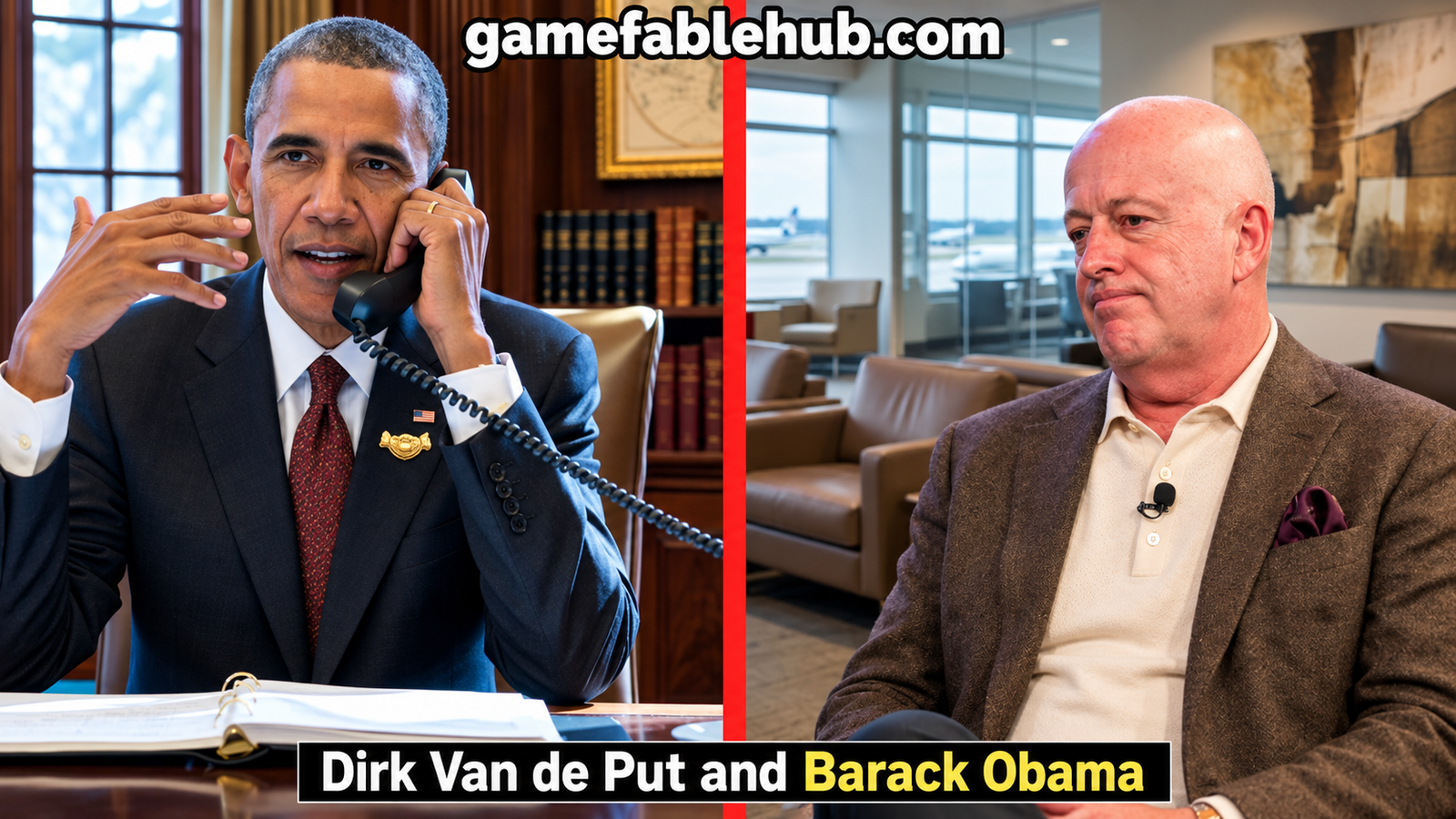
Dirk Van de Put and Barack Obama have an indirect professional connection through Ertharin Cousin, a former Obama administration diplomat who later joined the board of Mondelēz International, the company Van de Put leads. This documented overlap does not establish a personal friendship, direct partnership, or shared political project between the two men.
Their names also offer an interesting starting point for understanding leadership. Van de Put built his career in international business, while Obama rose through community organizing, law, and elected office.
Table of Contents
Looking at their backgrounds helps explain how corporate and political influence operate. It also makes it easier to separate a verifiable institutional connection from assumptions that go beyond the evidence.
Who Is Dirk Van de Put?
Dirk Van de Put is the chair and chief executive officer of Mondelēz International, the global snack company behind familiar brands including Oreo, Ritz, Cadbury Dairy Milk, Milka, and Toblerone.
His background combines scientific education with commercial experience. According to his official company biography, he holds a doctorate in veterinary medicine from the University of Ghent and a postgraduate business qualification from the University of Antwerp in Belgium.
The same biography lists fluency in Dutch, English, French, Spanish, and Portuguese. It also describes a career spanning major consumer businesses and several international markets.
For readers unfamiliar with his name, the products associated with his company provide useful context. A business leader can influence everyday purchasing decisions without becoming a household name himself.
His professional importance comes from the organization he leads, the decisions made within it, and the relationships connecting manufacturers, retailers, suppliers, employees, and consumers.
His Career Before Mondelēz
Van de Put worked at Mars and Coca-Cola before moving into senior positions at Danone and Novartis.
He later joined McCain Foods, serving as chief operating officer from 2010 to 2011 and president and chief executive officer from 2011 to 2017.
He became Mondelēz’s chief executive officer and a board member in November 2017, then became chair in April 2018. These dates distinguish his arrival as CEO from his later appointment to lead the board.
This career path illustrates how experience can transfer between industries. Food, beverages, and consumer healthcare involve different products, but executives in each field encounter questions about customers, distribution, pricing, operations, and organizational performance.
Who Is Barack Obama?
Barack Obama served as the 44th president of the United States from 2009 to 2017. He was the first African American to hold the presidency.
Born in Honolulu, Hawaii, Obama graduated from Columbia University before working as a community organizer in Chicago. He later attended Harvard Law School, where he became the first African American president of the Harvard Law Review.
His political career included service in the Illinois State Senate and the United States Senate. He won the presidential election in November 2008 and took office on January 20, 2009.
Obama’s route to leadership differed considerably from Van de Put’s. His career developed through community institutions, legal work, campaigning, and public office.
Understanding that difference is essential. The responsibilities of an elected president and a corporate chief executive may sometimes involve similar management skills, but their authority comes from different institutions.
What Connects Dirk Van de Put and Barack Obama?
The clearest documented connection identified in the official records reviewed for this article involves Ertharin Cousin.
On November 29, 2021, Mondelēz announced her appointment to its board of directors, effective January 1, 2022.
The announcement described her previous service as ambassador and permanent representative to United Nations food and agriculture agencies during the Obama administration. It also noted her experience leading the United Nations World Food Programme.
Van de Put welcomed her appointment and highlighted the value of her expertise in food policy and sustainability.
This creates an identifiable institutional link: someone who served in Obama’s administration later joined the board of the company led by Van de Put.
However, that connection has limits. It does not demonstrate that Obama arranged the appointment, participated in company decisions, or entered a business relationship with Van de Put.
An indirect professional connection should be described with the same precision as a direct one.
Why Ertharin Cousin’s Experience Matters
Cousin’s appointment offers a practical example of how experience can cross institutional boundaries.
Questions about food involve business operations, public policy, humanitarian needs, agriculture, and environmental conditions. Someone who has worked across these areas can bring several perspectives to a board discussion.
That helps explain the relevance of her background without turning her appointment into a broader political claim.
The useful story is the movement of professional expertise between sectors. Any additional claim about personal relationships or political influence would require separate evidence.
Their Careers Followed Different Timelines
Chronology helps clarify the relationship between Dirk Van de Put and Barack Obama.
Obama left the presidency on January 20, 2017. Van de Put became Mondelēz’s CEO in November of that year. His appointment therefore came after Obama’s presidential term had ended.
This matters whenever an article suggests that the two worked together in those particular roles. Such a statement needs evidence identifying an actual event, initiative, or agreement.
Their careers can be compared, and their institutions can have overlapping professional networks. Those observations do not establish cooperation during Obama’s presidency.
Dates provide a straightforward way to test a claim before accepting the larger story built around it.
Corporate Leadership and Presidential Leadership Compared
The following comparison concerns the responsibilities of their positions. It should not be treated as a psychological assessment of either man.
| Area | Corporate chief executive | U.S. president |
|---|---|---|
| Source of authority | Corporate governance and board appointment | Election and constitutional office |
| Main responsibility | Directing a company’s business | Leading the executive branch |
| Key audiences | Board, investors, employees, customers, and other stakeholders | Citizens, Congress, public institutions, and international counterparts |
| Common measures of performance | Business results, execution, and organizational health | Policy outcomes, administration, and public accountability |
| Major constraints | Resources, competition, regulation, and board oversight | Law, Congress, courts, budgets, and elections |
Both roles involve decisions made with incomplete information. Both also require cooperation from people whose interests may differ.
The comparison becomes less useful when it assumes that a country can be managed exactly like a company. Public institutions have obligations and limits that differ from commercial organizations.
How Decisions Reach Everyday Life
A corporate decision might affect a product’s price, packaging, availability, or production process. Consumers experience the result through purchases and services.
A presidential decision can affect government administration and public policy, often through processes involving Congress, agencies, courts, or international partners.
These are different routes to influence. Recognizing them helps readers evaluate responsibility more fairly.
It also prevents a familiar mistake: assigning every outcome within a large organization to a single person, even when many institutions and decision makers contributed.
Education and Experience in Their Leadership Journeys
The educational backgrounds of Van de Put and Obama suggest two distinct routes toward senior leadership.
Van de Put’s veterinary and business studies preceded a commercial career. Obama’s political science and legal education formed part of a path into community work and public service.
Neither background, by itself, explains everything about later performance. Education provides tools, while professional experience tests how people use them.
For someone planning a career, the comparison offers a useful lesson: an initial qualification does not always determine the final destination.
Skills can develop through changing responsibilities, unfamiliar environments, and sustained work with other people. Leadership careers often make more sense when viewed as a sequence of experiences rather than a single academic choice.
Public Communication and Trust
Communication provides another useful basis for comparison.
For a corporate executive, an explanation of strategy must help different audiences understand business priorities. Employees need direction, investors need clarity, and customers want confidence in the company’s products.
For a political leader, communication must explain public decisions to people who may hold sharply different values and expectations.
In either setting, effective communication requires more than an appealing message. The explanation must connect promises with actions and acknowledge meaningful limitations.
This is an analytical comparison of their roles. It does not imply that Van de Put and Obama use identical methods or share the same leadership philosophy.
Trust develops when people can understand a decision, assess the reasoning behind it, and compare the promised result with what happens afterward.
Obama’s Work Beyond the Presidency
Obama’s public role continued after his time in office, including through the Obama Foundation.
The foundation describes its mission as helping people become involved in changing their communities. Its stated priorities include active citizenship, leadership development, education, mentorship, and expanding opportunity.
Its Leaders program brings together participants working in public institutions, private organizations, and civil society. The program focuses on leadership development, shared learning, and community impact.
This provides a broader setting for discussing cooperation across sectors. People with business, government, and nonprofit backgrounds can work on related challenges while retaining different institutional responsibilities.
The existence of such programs does not establish Van de Put’s participation. A specific claim about his involvement would need its own supporting record.
Why Business and Government Networks Overlap
Professional networks often extend beyond a single industry.
A food company may need to understand agricultural conditions, consumer expectations, transportation, workforce issues, and the rules governing its operations. Public institutions approach some of the same subjects through different responsibilities.
That creates reasons for specialists to move between sectors or contribute expertise to more than one kind of organization.
For example, experience negotiating international food issues may be relevant to discussions about supply resilience. Knowledge of commercial distribution may also inform a nonprofit’s understanding of how products reach communities.
These examples explain why overlapping networks are possible. They should not be presented as evidence of a particular agreement between Dirk Van de Put and Barack Obama.
The distinction keeps the discussion informative without extending beyond what the records show.
How to Evaluate Claims About Their Relationship
When an article links two prominent names, the most useful question is what evidence supports the connection.
A company announcement can establish an appointment. An official biography can confirm a position or career milestone. A dated event record can document attendance or participation.
Each source supports a particular kind of statement.
A board appointment involving a former administration official supports an indirect institutional connection. It cannot, by itself, confirm a friendship, political endorsement, financial arrangement, or shared initiative involving that official’s former president.
Readers should also check whether several articles provide independent evidence or repeat the same underlying announcement.
Repeated wording can make a claim appear well established even when every version depends on a single source. Following the evidence back to its origin produces a clearer picture.
Leadership Lessons From the Comparison
Several practical lessons emerge from comparing these careers.
First, leadership operates within institutions. A person’s title matters, but so do the rules defining what that person can decide.
Second, experience across cultures and professional settings can broaden the range of questions a leader considers. That potential benefit still needs to be judged through actual decisions and outcomes.
Third, expertise can travel between business, government, and nonprofit work. Cousin’s career provides a documented example of that movement.
Finally, influence and personal connection are separate subjects. Two people can affect the same broad area of public life without working together.
These lessons make the comparison useful beyond the curiosity created by placing two recognizable names in one headline.
Frequently Asked Questions
What is the connection between Dirk Van de Put and Barack Obama?
An indirect connection exists through Ertharin Cousin. She served in the Obama administration and later joined Mondelēz International’s board, where Van de Put serves as chair and CEO.
Did Barack Obama appoint Dirk Van de Put to Mondelēz?
The records reviewed do not support that claim. Van de Put’s company appointment was announced as part of Mondelēz’s corporate leadership arrangements.
Are Dirk Van de Put and Barack Obama business partners?
The official sources reviewed for this article do not establish a direct business partnership between them.
Why compare their careers?
Their careers offer a way to examine corporate leadership, elected leadership, institutional responsibility, and the movement of expertise between sectors.
What should readers remember about their relationship?
The documented connection is indirect and institutional. Describing it accurately requires keeping that evidence separate from unverified claims about personal or political relationships.
About the Author