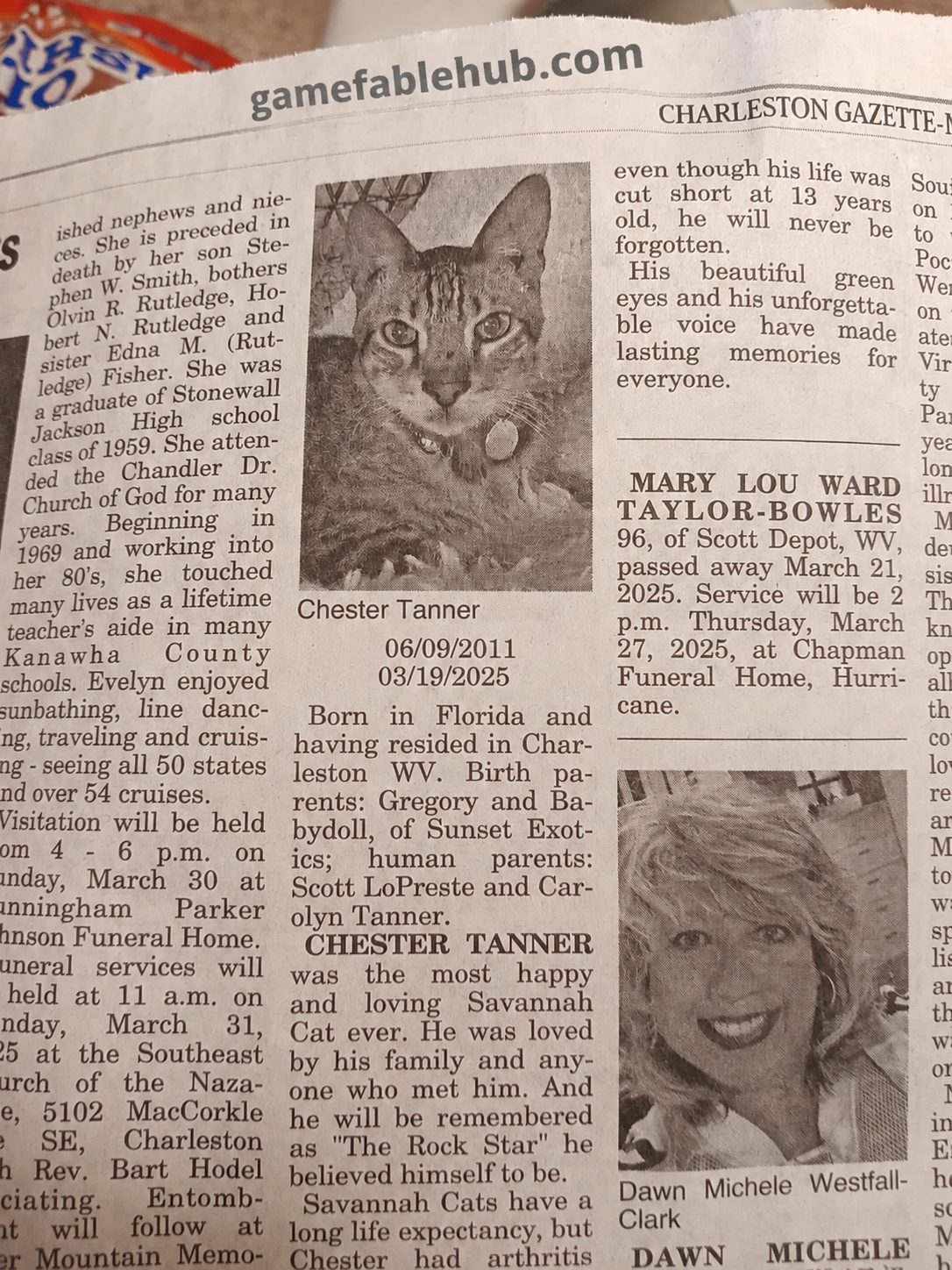
Charleston Gazette obituaries are death notices and memorial announcements published through the Charleston Gazette-Mail, a newspaper serving Charleston, West Virginia, and surrounding communities. Readers can search recent and historical obituaries to find information about deceased loved ones, funeral arrangements, surviving relatives, and community memorials. The newspaper’s obituary listings are available through its dedicated obituary service, with additional historical records preserved by newspaper archive providers.
Losing someone close to you is never easy. During difficult moments, families and friends often turn to local newspapers to find funeral information, share memories, and honor the lives of people who mattered to them.
For generations, newspaper obituaries have helped communities remember neighbors, relatives, teachers, veterans, business owners, and other individuals whose lives touched those around them.
Table of Contents
The Charleston Gazette-Mail continues this tradition by publishing obituary notices and maintaining searchable online listings.
Whether you are trying to locate a recent death announcement, researching family history, or looking for information about a memorial service, understanding how the obituary system works can save time.
This guide explains how to search Charleston Gazette obituaries, where to find older records, how funeral announcements are organized, and what to do when an obituary does not appear in the expected results.
It also covers obituary submissions, genealogy research, and seven practical ways to make your search more effective.
What Are Charleston Gazette Obituaries?
Charleston Gazette obituaries are published notices that announce a person’s death and often provide information about their life.
These notices may include the person’s name, age, place of residence, date of death, surviving family members, and funeral arrangements.
Some obituaries are brief announcements.
Others contain detailed accounts of a person’s career, family relationships, community involvement, and personal achievements.
The amount of information varies according to the notice submitted and the family’s preferences.
Understanding the Charleston Gazette-Mail
The Charleston Gazette-Mail is a newspaper based in Charleston, West Virginia.
Its obituary listings include notices concerning residents of Charleston and communities throughout the surrounding region.
Readers may encounter obituaries from places such as South Charleston, Dunbar, St. Albans, Cross Lanes, Elkview, and other West Virginia communities.
Not every person featured in the obituary section necessarily lived in Charleston.
A notice may appear because the deceased had family connections, previously lived in the region, or was associated with a funeral home serving the newspaper’s readership.
What information appears in an obituary?
An obituary may contain several kinds of information.
The person’s full name is usually the most important identifying detail.
Some notices also include nicknames, maiden names, or names used during different periods of life.
Other common details include dates of birth and death, places of residence, family relationships, educational background, employment history, and military service.
Funeral information may include visitation hours, service locations, burial arrangements, or memorial donation preferences.
However, not every obituary contains all these details.
Some families choose short announcements, while others publish longer personal tributes.
Are obituaries the same as death records?
No.
An obituary is generally a published notice or memorial written or supplied by relatives, funeral homes, or other contributors.
A death certificate is an official vital record issued through the appropriate government authority.
Obituaries can provide valuable information, but they are not substitutes for certified death records.
This distinction is particularly important for genealogy, legal matters, insurance claims, and estate administration.
Where to Find Charleston Gazette Obituaries Online
The Charleston Gazette-Mail maintains obituary listings through a dedicated online service associated with Legacy.
The listings allow readers to browse notices, search for individuals, and review available memorial information.
The obituary service also provides options for submitting notices and receiving updates when new obituaries are published.
Legacy.com
Recent obituary listings
The newspaper’s recent obituary section organizes notices by publication date.
Readers can browse the available entries and select an individual notice for more information.
Depending on the obituary, a listing may include funeral home details, service announcements, and memorial messages.
The archive changes as additional notices are published.
For this reason, a page viewed today may display different entries from one viewed several weeks earlier.
Searching by first and last name
The obituary search system provides fields for first and last names.
This is often the most direct way to locate a particular person.
Using a complete name generally produces more precise results than searching for a surname alone.
However, names can be recorded differently across notices.
Someone may be listed under a nickname, married name, maiden name, or middle name.
If the first search produces no result, trying alternative name combinations can be useful.
Searching by publication date
The search interface also offers date-related filtering.
This is helpful when you know approximately when a notice appeared.
For example, someone researching a death that occurred several years ago may want to narrow results to a particular year.
It is important to remember that the date of death and the obituary publication date are not always the same.
A notice may appear days or weeks after the person died.
Searching by location
Location filters can help distinguish people with similar names.
If you know that someone lived in Dunbar, South Charleston, or another nearby community, that information may help narrow the search.
However, an obituary’s location may reflect a person’s last residence, funeral arrangements, or other information rather than their birthplace.
It is worth checking surrounding communities when the expected location produces no result.
Charleston Gazette Obituaries: 7 Helpful Search Methods
Finding the correct obituary can sometimes require more than one search.
Names may be common, records may be incomplete, and older newspaper notices may not appear in modern online indexes.
The following seven methods can improve your chances of locating the information you need.
1. Start with the person’s full name
The most useful starting point is usually the deceased person’s complete name.
Enter the first and last name exactly as you know them.
If you have a middle name or initial, keep it available for comparison.
However, avoid making your first search unnecessarily restrictive.
An obituary may omit a middle name or use an abbreviated version.
If the complete-name search produces no match, try the first and last name alone.
2. Try alternative spellings and nicknames
Names can appear in several forms.
Someone named William might have been known as Bill.
Elizabeth may appear as Betty, Beth, or Liz.
A person may also have used a different surname during their lifetime.
These variations are especially important when researching older family records.
Spelling errors can occur in historical newspaper material, including digitized text.
Trying several reasonable variations can help uncover results that would otherwise be missed.
3. Narrow the search by date
Knowing the approximate date of death can make a search much easier.
If the exact date is unknown, begin with a broader period.
You can then narrow the results as you identify likely matches.
Remember that publication dates may differ from death dates.
Families sometimes wait until funeral arrangements are finalized before publishing a notice.
In other cases, a memorial announcement may be published long after the death.
4. Search nearby West Virginia communities
Charleston is connected to numerous surrounding communities.
A person associated with Charleston may have spent their later years elsewhere.
Their obituary might identify another town as their residence.
For this reason, searching only Charleston may be too restrictive.
Consider nearby communities and the locations of funeral homes that served the family.
Geographic flexibility can be particularly helpful when researching relatives who moved during their lives.
5. Check funeral home announcements
Funeral homes frequently publish obituary information on their own websites.
These notices may contain service schedules, memorial arrangements, photographs, and family messages.
The Charleston Gazette-Mail obituary directory identifies several funeral homes associated with published notices, including Gatens-Harding Funeral Home, Handley Funeral Home, Keller Funeral Home, and Bartlett-Nichols Funeral Home.
Legacy.com
If you know which funeral home handled the arrangements, checking its obituary listings may help you locate the notice.
6. Explore historical newspaper archives
Older obituaries may not appear in the same search results as recent notices.
Historical newspaper collections can provide access to scanned pages, archived articles, and older obituary announcements.
NewspaperArchive maintains collections associated with the Charleston Gazette and Gazette-Mail titles.
GenealogyBank also provides a Charleston Gazette-Mail obituary archive covering records from 2015 onward.
GenealogyBank
+1
These resources can be especially useful for family history research.
Some archive services require subscriptions to access complete newspaper pages.
7. Compare information from multiple records
When you find a possible match, compare the details with other available records.
Look for consistent names, ages, locations, relatives, and dates.
A person with a common name may have several unrelated obituary matches.
Checking additional information can help avoid identifying the wrong individual.
For genealogy research, marriage records, census records, cemetery information, and death certificates may provide supporting evidence.
The goal is to establish a reliable connection rather than assume the first search result is correct.
How to Find Recent Charleston Gazette Obituaries
Recent obituaries are often easier to locate than historical notices because they are more likely to appear in searchable online listings.
The Charleston Gazette-Mail obituary directory allows readers to browse published notices and filter results using available search options.
Finding today’s obituary listings
Readers looking for newly published notices can begin with the most recent publication dates.
The online directory displays recent obituary entries and allows browsing through additional results.
However, an obituary published today does not necessarily mean the person died today.
Some families publish announcements several days after a death, particularly when funeral arrangements require additional planning.
Others publish memorial notices marking anniversaries or upcoming services.
The publication date should therefore be understood separately from the date of death.
Finding obituaries from the past week
Searching recent notices by date can be useful when someone has heard about a death but does not know the exact publication day.
Start with the person’s surname if it is known.
If the search produces too many matches, add the first name or location.
You can also review notices published over several days rather than limiting the search to a single date.
This approach is especially useful when funeral arrangements were announced after the original death notice.
Finding obituaries from the past month
A broader date range can help locate notices that were missed when first published.
Families sometimes arrange memorial services weeks after a death.
In those circumstances, the obituary may include information about a future gathering rather than an immediate funeral.
If you cannot find the notice, consider whether it may have been published by a funeral home or another regional newspaper.
Why a recent obituary may not appear immediately
Online publication is not always instantaneous.
A notice may require submission, verification, editing, or processing before it becomes visible.
The obituary submission service explains that newly submitted notices can take time to appear online after publication processing.
Families should use their confirmation information or contact the publisher if an expected notice is missing.
Legacy.com
Charleston Gazette Obituaries Archives and Historical Records
Historical obituaries are valuable because they preserve details that may not appear in other public documents.
An older obituary might identify family relationships, previous residences, occupations, schools, military service, and community activities.
These details can help researchers understand a person’s life within the wider history of West Virginia.
Charleston Gazette historical newspaper collections
NewspaperArchive maintains a historical Charleston Gazette collection covering material from 1924 through 2015.
The archive includes digitized newspaper pages that may contain obituaries, community announcements, and other historical reporting.
NewspaperArchive
However, the availability of newspaper pages does not guarantee that every obituary from every year has been digitized or indexed.
Some records may be missing, difficult to read, or accessible only through a subscription.
Charleston Gazette-Mail archives
The Charleston Gazette-Mail name is also represented in historical newspaper collections.
Some archive providers organize material by newspaper title, date, or publication history.
This means that a search for a historical obituary may require checking more than one collection.
A person who died many decades ago may appear under an earlier newspaper title rather than the modern Charleston Gazette-Mail name.
Understanding this can make historical research more effective.
Using GenealogyBank for obituary research
GenealogyBank provides an obituary search collection associated with the Charleston Gazette-Mail from 2015 onward.
Its search options include names and date ranges.
The service also recommends using alternate names, locations, and additional identifying information when researching family history.
GenealogyBank
Researchers should check access requirements before assuming that every result can be viewed without payment.
What if an old obituary is not digitized?
Not every historical newspaper notice is available online.
Some records may survive only in physical newspapers, microfilm, or local historical collections.
Public libraries and genealogical organizations can sometimes help researchers identify where older newspaper materials are preserved.
When researching a particularly old death, it may be useful to consult multiple sources rather than relying on one online database.
How to Use Charleston Gazette Obituaries for Genealogy
Genealogy is one of the most valuable uses of historical obituary collections.
Family researchers often begin with a known relative and gradually connect names, dates, and places across generations.
An obituary can provide clues that help connect otherwise separate records.
Discovering family relationships
Many obituaries identify spouses, children, siblings, parents, and other relatives.
These details may help establish relationships within a family tree.
However, family structures can be complicated.
An obituary may omit relatives, use informal names, or describe relationships differently from official documents.
Researchers should treat obituary information as useful evidence rather than unquestionable proof.
Identifying previous residences
A notice may mention where someone was born, raised, educated, employed, or lived during retirement.
These locations can guide searches for additional records.
For example, a person who died in Charleston may have been born in another West Virginia county.
Knowing that earlier location can help researchers locate marriage, census, or property records.
Learning about occupations and community life
Obituaries often preserve information about a person’s working life.
They may mention employment in education, mining, healthcare, transportation, public service, or local businesses.
Such details can provide historical context.
They may also lead researchers toward company records, professional directories, or newspaper articles.
Connecting generations
An obituary may identify surviving children and grandchildren.
When combined with older records, these names can help establish connections between generations.
Care is needed when dealing with living relatives.
Information should be handled respectfully, particularly when preparing a publicly accessible family history.
Confirming dates and identities
Dates of birth and death are useful research details.
However, mistakes can occur in published notices.
Researchers should compare important dates with official records whenever possible.
A death certificate or another authoritative record may be necessary when exact dates have legal or genealogical significance.
How to Submit an Obituary to the Charleston Gazette-Mail
Families wishing to publish an obituary can use the newspaper’s obituary submission process.
The Charleston Gazette-Mail provides an online submission option through its obituary service.
Its listing also provides a contact telephone number, 304-348-5182, for obituary-related inquiries.
Legacy.com
Prepare the essential information
Before submitting an obituary, gather the details the family wants to include.
These may include the person’s full name, age, date of death, place of residence, and information about funeral arrangements.
Families may also wish to include a brief life story.
This can mention important relationships, work, education, hobbies, military service, and community involvement.
Only include personal information the family is comfortable making public.
Write a respectful tribute
A meaningful obituary does not need to be lengthy.
A few carefully written paragraphs can communicate the person’s character and the importance of their relationships.
Specific details often make a tribute more personal.
For example, mentioning someone’s dedication to gardening, teaching, music, or helping neighbors may communicate more than broad statements about kindness.
The goal is to honor the individual accurately and respectfully.
Include funeral and memorial arrangements
If the family wants readers to attend a service, provide clear information.
Include the service date, time, venue, and any relevant instructions.
If arrangements are private, that preference can be stated.
Some families request memorial donations instead of flowers.
When including donation information, confirm that the organization and instructions are accurate.
Review the obituary before submission
Check names, dates, locations, and family relationships carefully.
Small mistakes can cause confusion, particularly when an obituary is later used for genealogical research.
It may be helpful to ask another family member to review the notice.
Also confirm that the obituary reflects the family’s wishes regarding privacy and personal information.
Understand publication costs and deadlines
Publication costs can depend on the selected placement, length, photographs, and other options.
Legacy’s Charleston Gazette-Mail submission service displays available placement options and explains that deadlines vary.
Families should confirm the actual price and deadline during the submission process rather than relying on an outdated estimate.
Legacy.com
What Makes a Meaningful Charleston Gazette Obituary?
An obituary is more than a formal death announcement.
It can become a lasting record of a person’s life.
While dates and family names are important, the most memorable notices often include details that reveal personality and character.
Personal stories
A brief story can communicate something meaningful about a person.
It might describe a lifelong friendship, a favorite tradition, or a commitment to helping others.
These details make the obituary more personal without requiring an elaborate biography.
Family and community connections
Many people are remembered through their relationships.
An obituary may acknowledge the importance of family, friends, colleagues, neighbors, and community organizations.
These connections help readers understand how the person contributed to the lives of others.
Achievements and interests
Professional accomplishments may be important, but personal interests can be equally meaningful.
A person may have loved cooking, fishing, volunteering, reading, or attending local sporting events.
Including these details can create a fuller picture of their life.
A respectful tone
There is no single correct way to write an obituary.
Some families prefer traditional language.
Others choose a warm, conversational style that reflects the person’s personality.
The most important qualities are accuracy, sensitivity, and respect.
Common Problems When Searching Charleston Gazette Obituaries
Even a well-organized obituary directory cannot guarantee that every search will produce the expected result.
Understanding common problems can make the process less frustrating.
The person’s name is missing
The obituary may use a nickname, middle name, maiden name, or alternate spelling.
Try searching different name combinations.
If you know the approximate date of death, use that information to narrow the search.
The obituary appeared in another newspaper
A person with Charleston connections may have died in another state.
Their family may have chosen to publish the obituary in the community where they lived most recently.
Searching regional newspapers and funeral home records can sometimes help.
The notice has not been published
Not every death results in a newspaper obituary.
Some families choose private announcements, funeral home notices, or other memorial arrangements.
The absence of a newspaper listing should not be treated as proof that a death did not occur.
The record is too old
Older notices may be stored in historical newspaper collections rather than recent obituary databases.
Some may not have been digitized.
Checking historical archives, libraries, and genealogical collections can help expand the search.
Several people have the same name
Common names can produce multiple possible matches.
Compare ages, locations, family relationships, and dates before identifying a particular obituary as the correct one.
This is especially important when researching family history.
Why Charleston Gazette Obituaries Matter to West Virginia Communities
Local obituaries preserve a kind of history that may otherwise disappear.
Major historical events are often documented in books and news reports.
The everyday lives of residents, however, are frequently remembered through family records, community stories, and newspaper notices.
An obituary may preserve the story of someone who spent decades working in a local school.
Another may remember a volunteer who helped neighbors during difficult times.
Others recognize veterans, healthcare workers, business owners, parents, grandparents, and people whose contributions were primarily personal.
Together, these notices create a record of community life.
Preserving local identity
West Virginia communities often have strong family and neighborhood connections.
Obituaries can reflect these relationships through references to local schools, churches, employers, and community organizations.
For historians, such details can provide insight into how communities changed over time.
Helping families stay connected
An obituary can help relatives and friends learn about a death when they live far apart.
It may also provide information about memorial services and opportunities to offer condolences.
Digital obituary listings make this information accessible to people who no longer live in the area.
Creating a lasting memorial
Many online obituary services allow families and friends to share memories or condolences.
These messages can become meaningful keepsakes.
They may preserve stories that relatives had never heard before.
For some families, the obituary becomes the starting point for a larger collection of photographs, memories, and family history.
Frequently Asked Questions About Charleston Gazette Obituaries
1. Where can I find Charleston Gazette obituaries?
Charleston Gazette obituaries can be found through the Charleston Gazette-Mail’s online obituary directory, which is hosted through Legacy. Readers can browse recent notices and search for specific individuals using names and other available filters.
2. How do I search for an old Charleston Gazette obituary?
Begin with the person’s full name and approximate date of death. If the obituary does not appear in recent listings, check historical newspaper collections such as NewspaperArchive or GenealogyBank. Local libraries may also help with older records.
3. Are Charleston Gazette obituaries free to read?
Some obituary listings and memorial information are publicly accessible. However, access to certain historical newspaper collections or complete archived pages may require a subscription or payment.
4. How do I submit an obituary to the Charleston Gazette-Mail?
Families can use the newspaper’s obituary submission service. The newspaper also lists 304-348-5182 as a contact number for obituary inquiries. Submission options, prices, and deadlines should be confirmed before publication.
5. Why can’t I find someone’s obituary?
The notice may have been published under another name, appeared in a different newspaper, or not been published at all. Older records may also be missing from online indexes. Trying alternative spellings, dates, and locations can help.
6. Can Charleston Gazette obituaries help with family history?
Yes. Obituaries may contain names of relatives, birth and death dates, residences, occupations, and other information useful for genealogy. Important details should be compared with additional records whenever possible.
Conclusion
Charleston Gazette obituaries provide an important way for families, friends, and researchers to remember individuals connected with Charleston, West Virginia, and surrounding communities.
The Charleston Gazette-Mail’s online obituary directory makes it possible to browse recent notices, search for specific individuals, and find information about memorial arrangements.
Historical newspaper collections provide additional opportunities to explore older records and discover details about previous generations.
Whether you are searching for a recent funeral announcement or researching a relative who lived decades ago, a careful search can make the process easier.
Begin with the person’s name, consider alternate spellings, use approximate dates, and expand your search to funeral homes and historical archives when necessary.
The lasting value of Charleston Gazette obituaries is their ability to preserve personal stories, family connections, and community memories for future generations.
About the Author